
Guide · Chassis comparison
Ford E-450 4x4 vs Transit AWD vs Sprinter AWD
Updated
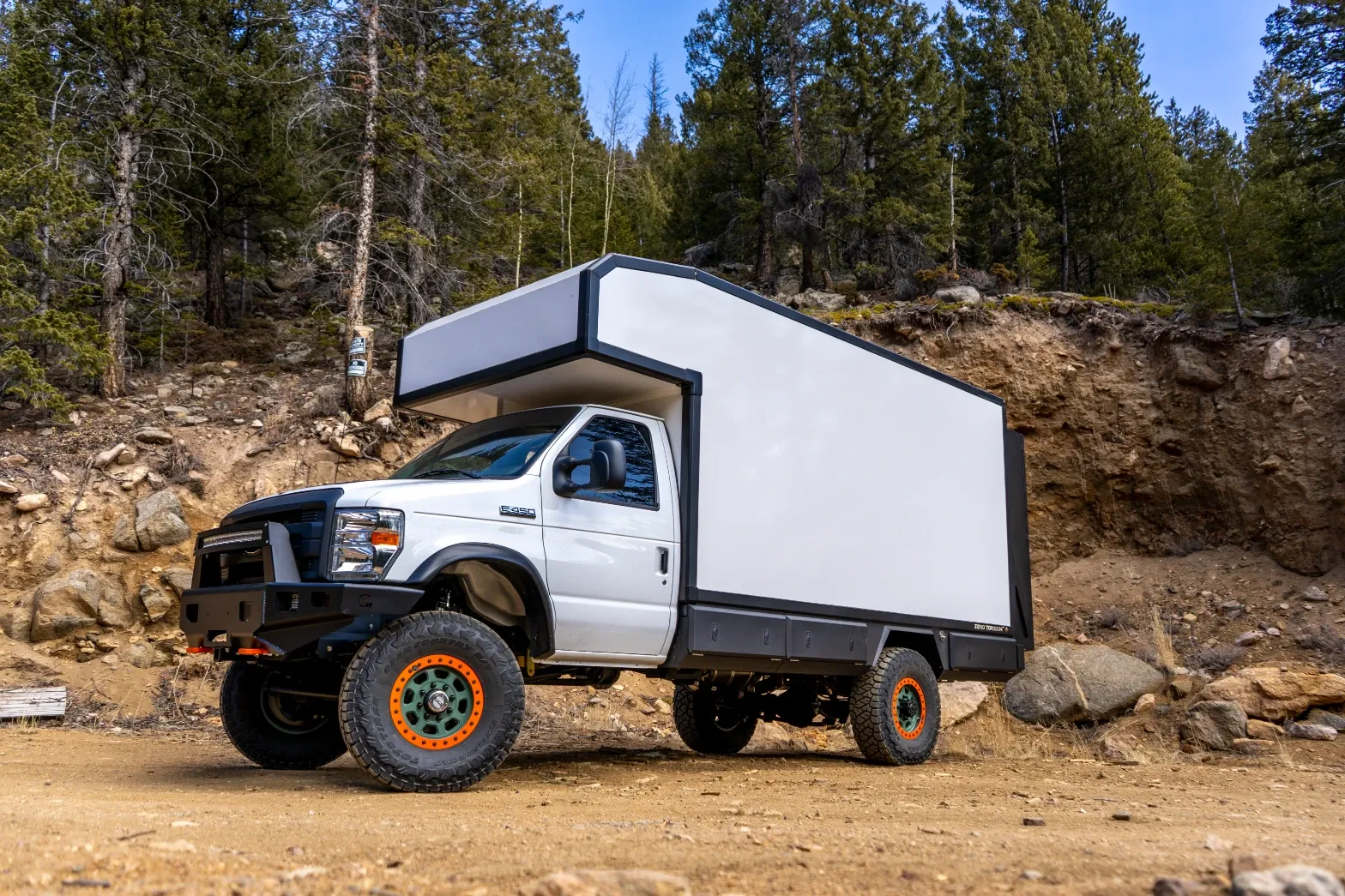
The Transit, Sprinter and Ford E-Series can all carry a Foundation composite camper body — but the E-Series changes the equation underneath it. Transit and Sprinter are excellent choices when the priority is a modern factory-AWD chassis, good road manners and a van-sized footprint. The E-Series becomes compelling when the build needs a heavier-duty chassis, specialist 4x4 capability, more GVWR and more room in the weight budget for an off-road-focused build. The E-Series isn’t automatically the “better” expedition vehicle. It’s the more truck-like option.
Compare
Quick comparison
| Specification | Transit AWD | Sprinter AWD | Ford E-Series / E-450 4x4 |
|---|---|---|---|
| Fuel | Gasoline | Diesel | Gasoline |
| Foundation bodies | FV-138 / FV-156 / FV-178 | FV-144 / FV-170 | E-138s / E-138 / E-158s / E-158 |
| Walkable floor | 72.5–95 sq. ft. | 73.5–95.5 sq. ft. | Approx. 73–92 sq. ft. |
| Max Foundation-listed GVWR | 11,000 lb | 11,030 lb | 14,500 lb |
| Drivetrain | Factory AWD | Factory AWD | OEM rear-drive; specialist aftermarket 4x4 conversion available |
| Foundation panel | 1.5-inch composite / R11 | 1.5-inch composite / R11 | 1.5-inch composite / R11 |
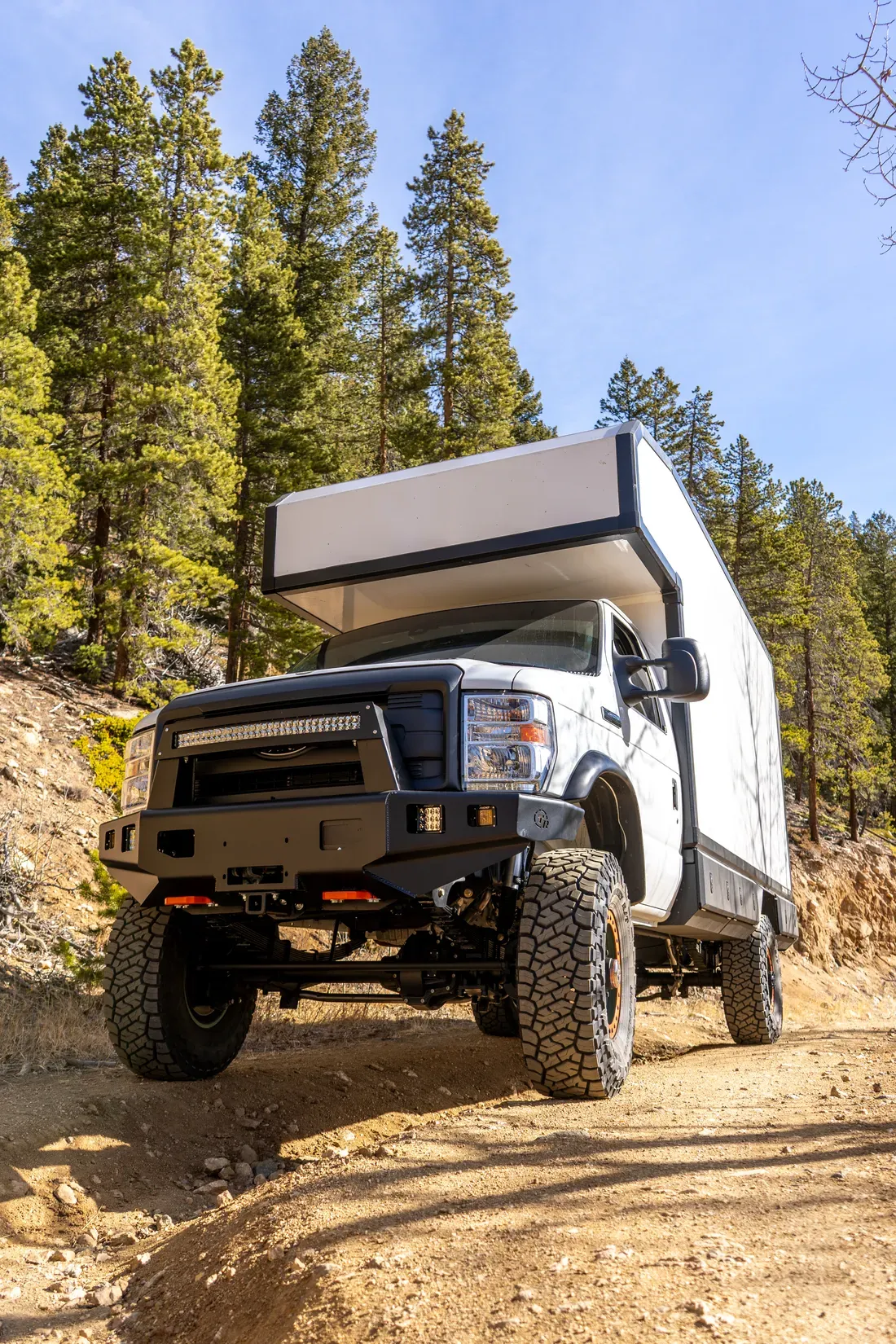
The E-Series adds what the vans don’t: Ford’s 7.3L “Godzilla” gas V8 (325 hp / 450 lb-ft), a 40-gallon fuel tank, and Foundation’s Zero-Torsion subframe with 22° of articulation. Foundation lists fuel capacity where current specification confirms it.
AWD and 4x4 solve different problems
“AWD versus 4x4” gets turned into a lot of marketing noise. The useful distinction is mission.
Transit AWD and Sprinter AWD are integrated factory systems intended to improve traction across weather, loose surfaces and uneven roads.
The E-Series begins as a rear-drive commercial cutaway. A specialist conversion can add the mechanical hardware for a much more off-road-oriented configuration, including a transfer case and corresponding suspension and axle changes depending on the selected conversion.
That makes the E-Series a better starting point when the intended use genuinely requires:
- Low-range gearing
- Larger off-road tires
- More ground clearance
- More aggressive terrain
- A heavier finished vehicle
It does not mean a customer driving highways, snow and forest roads needs an E-450.
The largest vehicle doesn’t have the largest living area
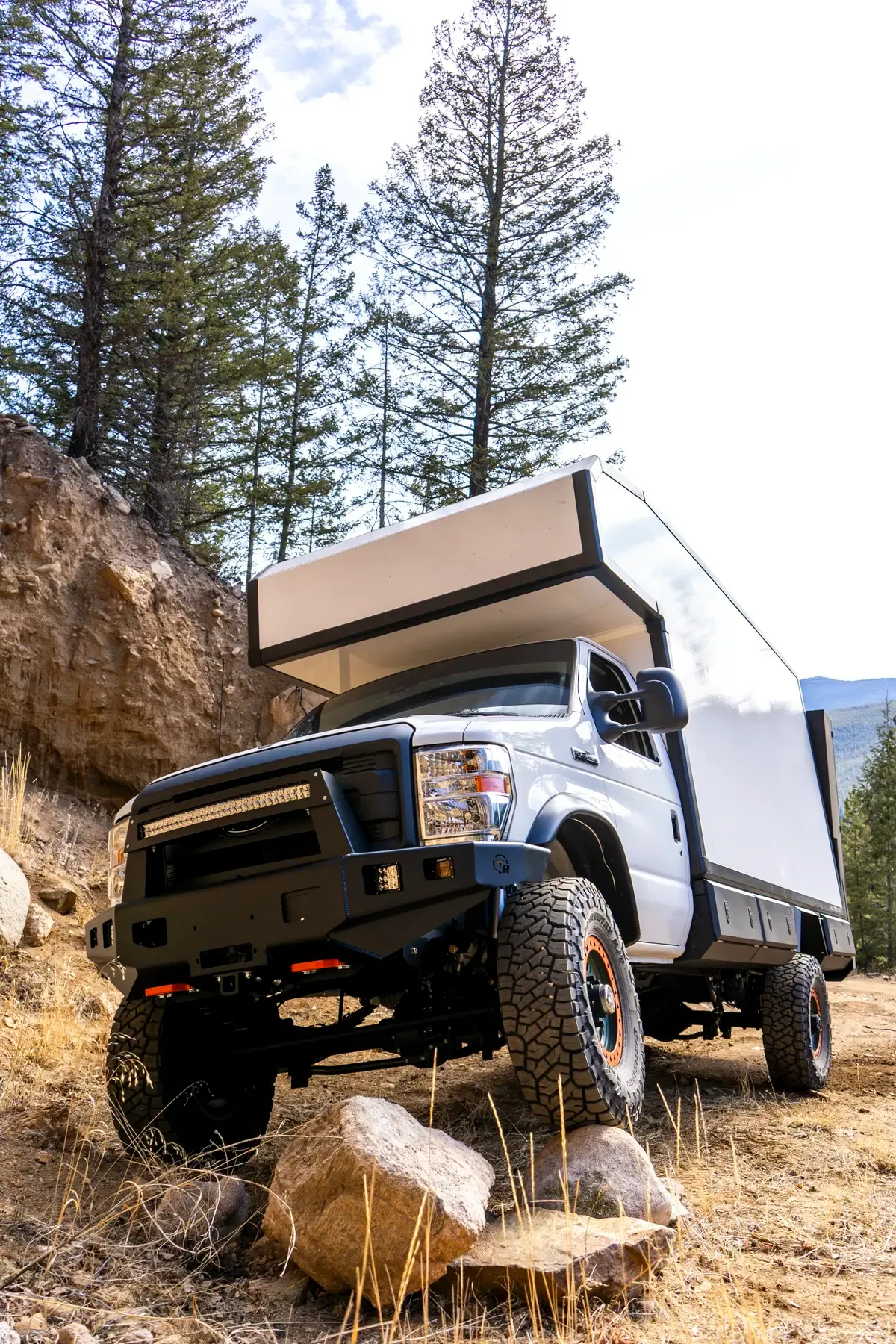
This is an important point. The E-Series is the heavier-duty platform, but its largest current Foundation body has approximately 92 square feet of walkable floor.
The Transit FV-178 provides approximately 95 square feet and the Sprinter FV-170 approximately 95.5 square feet.
So choose an E-450 for chassis capability, not because you assume the camper is automatically larger. For somebody whose priority is maximum living area in a relatively compact van-derived platform, the largest Transit or Sprinter may actually be a better fit.
Where the E-450 really separates itself: GVWR
This is the strongest numerical difference.
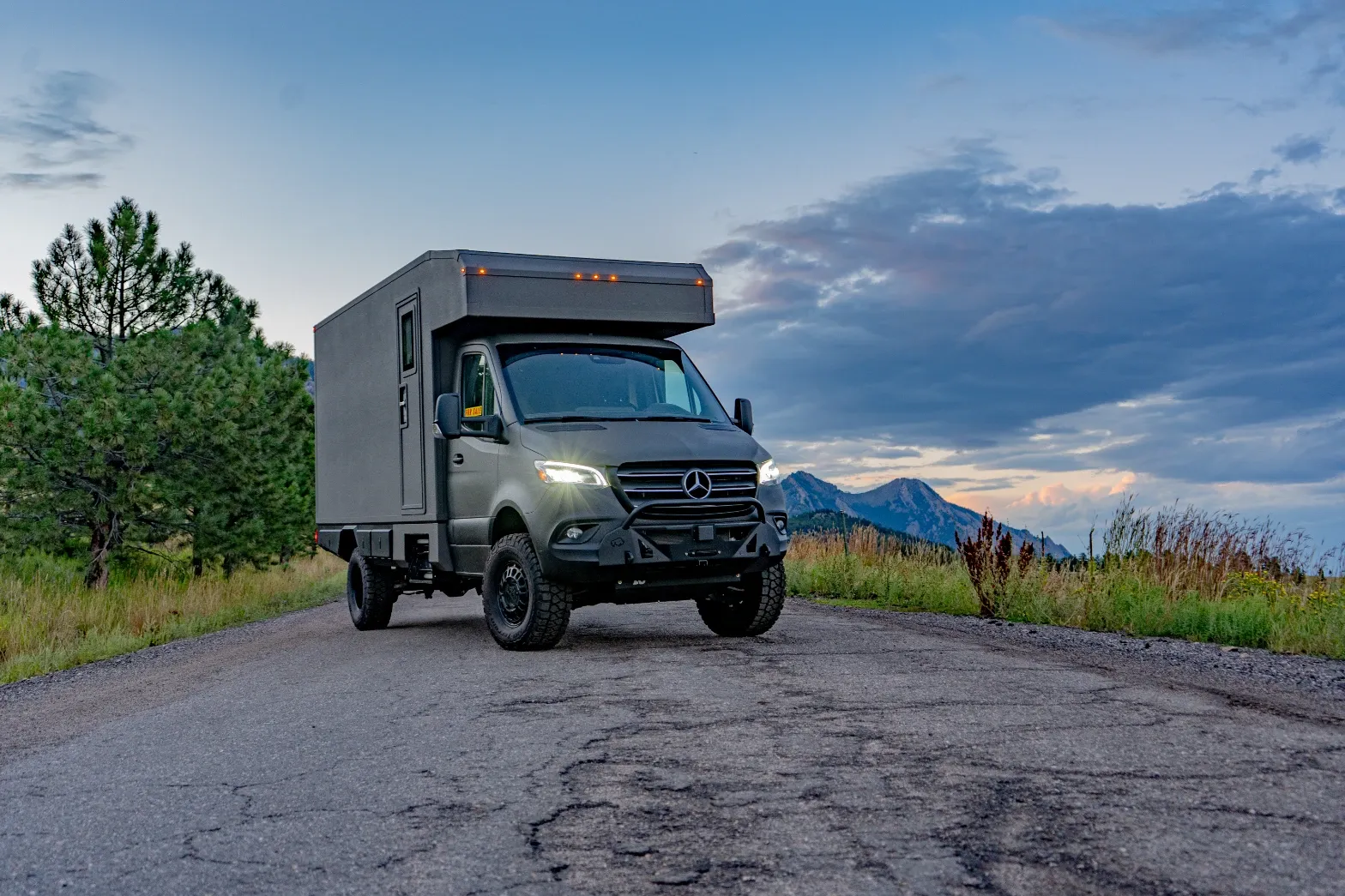
Foundation’s Transit tops out at 11,000-lb GVWR. The current Foundation Sprinter configuration reaches approximately 11,030 lb. An E-450 can reach 14,500 lb.
That extra chassis rating matters because expedition builds get heavy quickly. A completed vehicle may carry:
- Water
- Lithium battery systems
- Solar
- Heating and air conditioning
- Cabinetry
- Bathroom and plumbing
- Spare tires
- Recovery gear
- Bicycles or motorcycles
- Passengers
- Food and expedition equipment
The exact usable payload still depends on the completed vehicle’s real axle and scale weights, but the E-450 gives the designer materially more chassis capacity to work with.
The E-Series also carries more fuel in the Foundation configuration
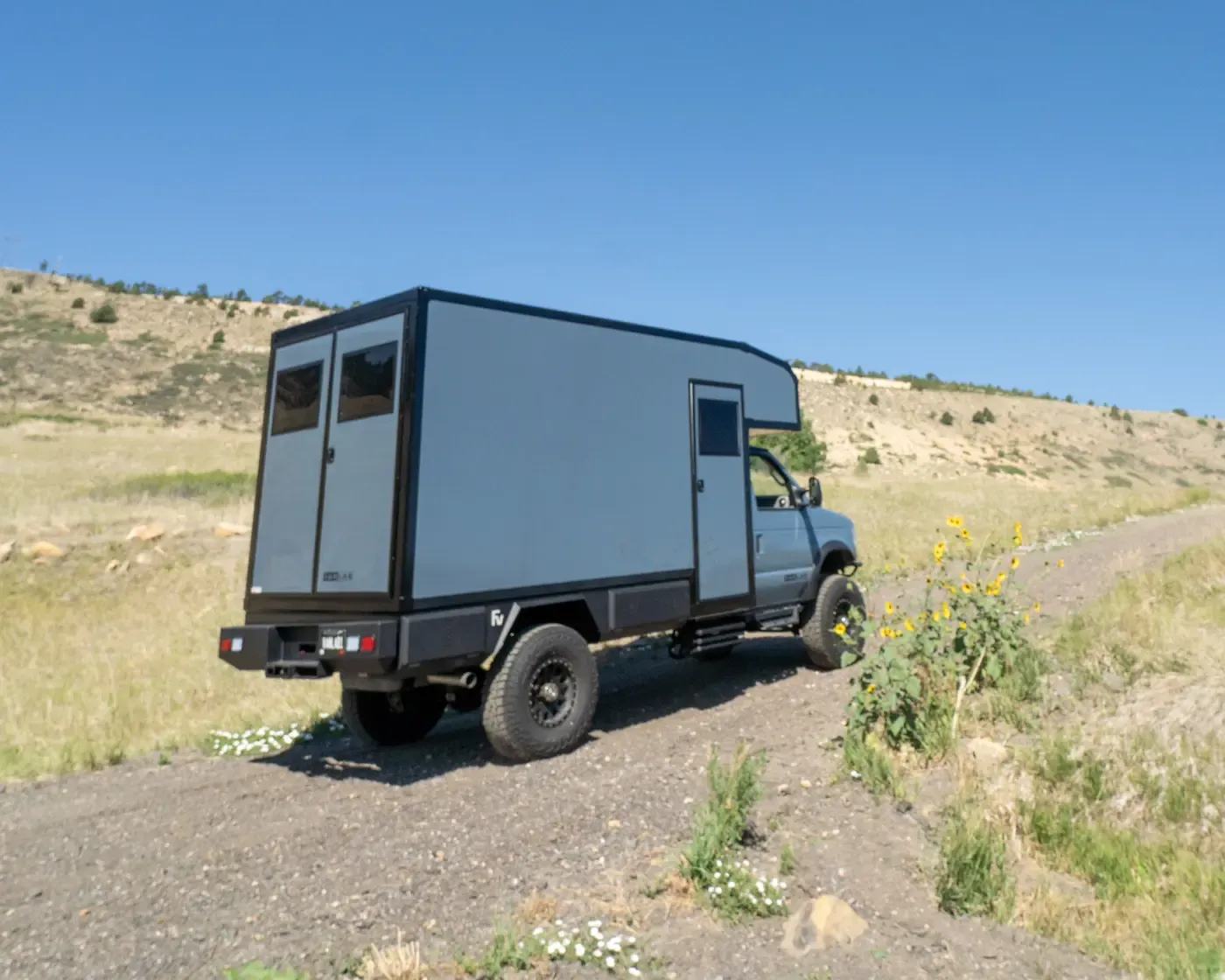
Foundation currently lists a 40-gallon fuel tank on its E-Series configuration, compared with approximately 25 gallons on the Transit and 24.5 gallons on the Sprinter.
That doesn’t mean we should publish an estimated range comparison without measured completed-vehicle fuel economy. A larger tank simply means more onboard fuel capacity — and for remote travel, that can be meaningful.
The tradeoff: the E-Series is intentionally more truck-like
There’s a reason Transit and Sprinter remain strong choices. A modern Transit or Sprinter gives you factory AWD, a contemporary commercial-van cab and a platform well suited to significant highway mileage.
An E-Series 4x4 is more purpose-driven. The chassis architecture and conversion make sense because you want the capability they provide — not because every camper benefits from being taller, heavier and more mechanically oriented toward off-road use.
If most of your travel is interstate, paved mountain roads, ski areas and improved forest roads, an AWD Transit or Sprinter may be the smarter tool.
What does the Foundation subframe change?
A body-on-frame E-Series can twist substantially as opposite wheels move through uneven terrain. Foundation mounts the rigid composite habitat on an articulating subframe so that chassis twist isn’t transferred directly into the camper structure.
The important engineering concept isn’t that the camper experiences literally zero force. It’s that the mounting system reduces the transfer of chassis torsion into the rigid body — and that distinction becomes increasingly important as terrain and chassis articulation increase.
Foundation’s Zero-Torsion subframe allows up to 22° of articulation. Read more in what a torsion-free subframe is and 3-, 4- and 5-point subframes explained.
Which should you choose?
Choose Transit AWD if:
- You want gasoline.
- You want factory AWD.
- You want the widest choice of Foundation van-body lengths.
- You expect primarily road, winter and moderate backcountry use.
- You want up to approximately 95 sq. ft. of walkable floor without stepping into the heavier E-Series platform.
Choose Sprinter AWD if:
- You specifically prefer diesel.
- You want Mercedes AWD and the Sprinter chassis environment.
- You want the FV-144 or FV-170 packaging.
- Your use is predominantly long-distance touring with moderate backcountry access.
Choose E-Series 4x4 if:
- Low-range 4x4 capability actually matters.
- You need significantly more GVWR.
- Your build carries substantial systems, equipment or gear.
- Additional onboard fuel capacity is attractive.
- You’re willing to accept a more truck-like platform to gain more off-road capability.
Bottom line
Transit and Sprinter are AWD touring platforms that can go surprisingly far. The E-Series is the step toward a more specialized 4x4 expedition platform.
Don’t buy the E-450 because “4x4 is better than AWD.” Buy it when the intended terrain and weight of the finished vehicle justify the additional chassis.
Common questions
Questions people ask
Is an E-450 better off road than a Transit AWD?
A properly configured specialist-converted E-450 can provide low-range 4x4, larger tires and more off-road-oriented suspension capability than a factory Transit AWD. Whether that capability is necessary depends on the intended terrain.
Is the E-Series larger inside?
Not necessarily. Foundation’s largest Transit and Sprinter bodies currently provide slightly more walkable floor area than the largest E-Series body.
How much more GVWR does an E-450 provide?
A properly configured E-450 can reach 14,500 lb GVWR versus roughly 11,000 lb on the Foundation Transit and Sprinter platforms.
Does Ford sell the E-450 as a factory 4x4?
No. The E-Series begins as a rear-wheel-drive cutaway chassis and receives a specialist aftermarket 4x4 conversion.
Can the same Foundation body construction be used across all three?
Transit, Sprinter and E-Series all use Foundation’s insulated composite camper-body architecture, although mounting and chassis-integration systems vary by platform.
Which is better for a motorcycle or heavy garage?
That depends on actual completed vehicle weight, rear axle load, garage placement and the motorcycle or equipment weight. A heavier-duty E-Series may provide more weight capacity, but every configuration should be evaluated individually.
Compare the platforms
Platforms discussed in this guide
Compare the three chassis directly, or see how each is built.
Related