
Guide · Chassis comparison
Ford F-550 vs Ram 5500 for an Expedition Vehicle
Updated
The Ford F-550 and Ram 5500 are much closer competitors than internet brand debates make them sound. Both are Class 5 chassis-cab platforms. Both are available with 4x4. Both offer gasoline and diesel powertrains. Both can reach a 19,500-lb GVWR in properly configured versions, and either can serve as the foundation for a substantially larger composite expedition habitat than a Transit, Sprinter or E-Series. For a Foundation build, there’s no automatic winner — the right answer comes from the exact chassis configuration and the habitat you’re trying to package.
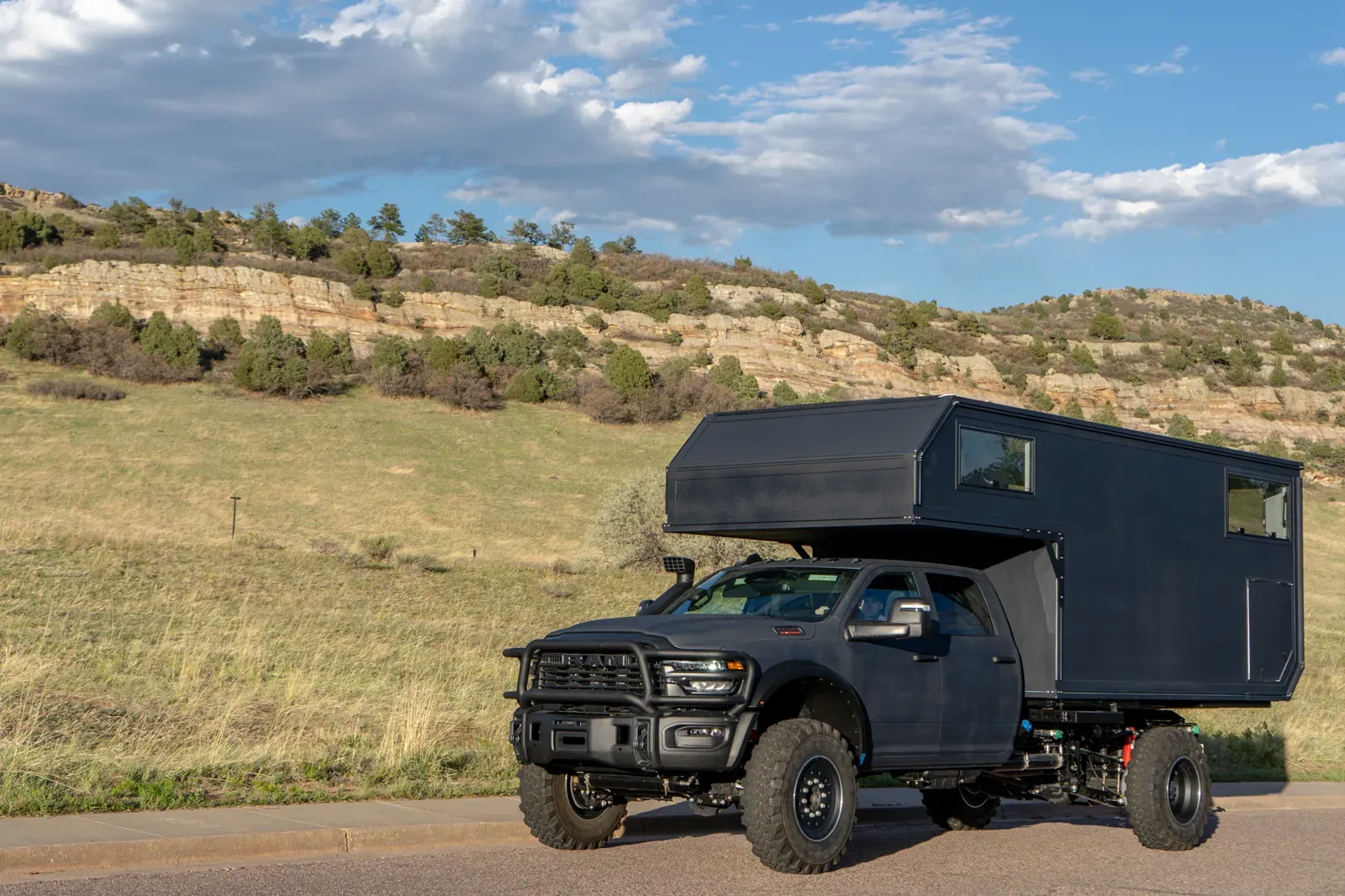
What matters more than the badge
For an expedition camper, we care about:
- Cab configuration
- Wheelbase and cab-to-axle dimension
- Front and rear axle ratings
- Actual bare-chassis weight
- Intended body length
- Fuel and water
- Passenger count
- Suspension
- Wheel and tire package
- Rear overhang
- Storage
- Towing
- Final weight distribution
That’s much more useful than saying “Ford is better” or “Cummins is better.”
Compare
F-550 vs Ram 5500 at a glance
| Specification | Ford F-550 | Ram 5500 |
|---|---|---|
| Vehicle class | Class 5 chassis cab | Class 5 chassis cab |
| Maximum GVWR | Up to 19,500 lb | Up to 19,500 lb |
| Drive | 4x2 / 4x4 | 4x2 / 4x4 |
| Gas engine | 7.3L V8 | 6.4L HEMI V8 |
| Diesel engine | 6.7L Power Stroke V8 | 6.7L Cummins turbodiesel I6 |
| Current diesel output | — | Up to 360 hp / 800 lb-ft * |
| Cab choices | Regular · SuperCab · Crew | Regular · Crew |
| Cab-to-axle | Multiple CA configurations | Multiple CA configurations |
| Transmission | Current 10-speed automatic * | — |
| Maximum published GCWR | Up to 43,000 lb * | Up to 43,000 lb (diesel) * |
| Maximum dual fuel capacity | — | Up to 74 gallons * |
| Foundation habitat | Custom 2.5-inch composite | Custom 2.5-inch composite |
“—” means a figure isn’t called out in this comparison, not that a feature is unavailable. Items marked * are OEM- and configuration-dependent — confirm them against current model-year specifications for your exact truck. Foundation sizes and quotes every medium-duty build around the specific chassis, cab, and axle ratings.
Capacity is basically a draw — until you configure the actual truck
Both platforms can wear a 19,500-lb GVWR badge. That doesn’t mean they have identical payload on the finished vehicle.
Payload is GVWR minus what that particular chassis — and everything installed on it — actually weighs. Diesel versus gas changes chassis weight. Crew cab versus regular cab changes chassis weight. 4x4 changes weight. Fuel tanks, suspension and wheels change weight. Then the habitat changes it again.
That’s why we’d rather engineer an expedition body around the actual VIN and configuration and axle capacities than advertise a generic maximum payload and pretend it applies to every build.
For a large expedition truck, rear axle capacity is only part of the problem — the finished center of gravity and front/rear weight distribution are just as important.
Ford gives you a SuperCab option
One meaningful architectural difference is cab choice. The F-550 is offered as Regular Cab, SuperCab and Crew Cab; the Ram 5500 is offered as Regular Cab and Crew Cab.
The Ford SuperCab can be interesting for expedition builds because it creates a middle ground between minimum cab length and a full crew cab. That can potentially preserve more chassis length for the habitat while still giving additional cab storage or seating.
But it isn’t automatically the best layout. Every inch added to the cab affects:
- Habitat length
- Overall length
- Breakover
- Departure geometry
- Turning behavior
- Cabover design
- Pass-through location
This is why we prefer starting with the mission and working backward to the chassis.
Ram has a very broad cab-to-axle menu
Ram’s 5500 chassis is available in multiple cab-to-axle configurations that can create useful packaging options for an expedition body. For an expedition camper, cab-to-axle determines a lot of the geometry:
- Where the rear axle sits under the habitat
- How long the body can be without excessive overhang
- Where large water tanks and batteries go
- How much underbody storage you can package
- Where the spare goes
- What happens to departure angle
Those questions often matter more than peak horsepower.
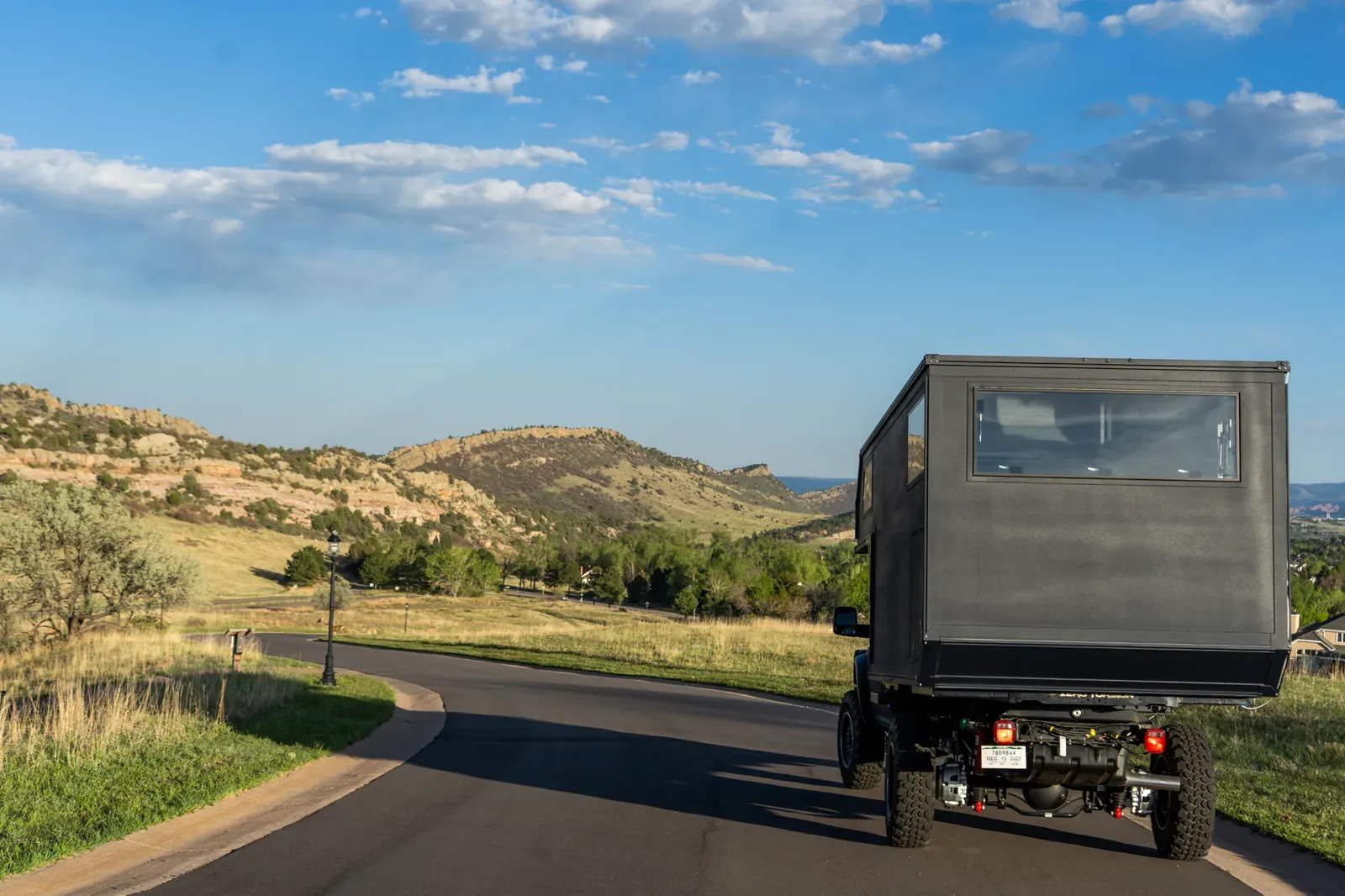
Gas or diesel?
Ford offers 7.3L gas and 6.7L Power Stroke diesel choices in F-550 configurations. Ram offers a 6.4L HEMI gas V8 and the 6.7L Cummins turbo-diesel.
We wouldn’t make a universal Ford-versus-Cummins reliability recommendation. The more useful expedition decision is:
- How much annual mileage you expect
- How much you’re towing
- How much the completed vehicle weighs
- Whether you want diesel engine-braking characteristics
- How comfortable you are with modern diesel emissions systems
- Where you’ll travel
- Whether you specifically want gasoline for a particular mission
There are very good expedition builds on both fuels.
Fuel capacity can materially affect packaging
Ram offers high-capacity fuel configurations, including an available dual-tank system reaching approximately 74 gallons on certain chassis configurations. That’s potentially significant on a remote-travel vehicle.
But we wouldn’t reduce the F-550-versus-Ram decision to “Ram has more fuel.” Exact tank availability depends on chassis configuration, and aftermarket or body-integrated packaging can change the final vehicle substantially. Fuel is one system among many competing for frame space.
The habitat itself doesn’t need to change because you picked Ford or Ram
Foundation’s medium-duty architecture is designed around a thicker 2.5-inch composite panel with approximately R17 insulation and an articulating subframe appropriate to the larger habitat and flexible truck frame.
That means Ford versus Ram is again primarily a chassis decision. The body can be designed around:
- Intended body length
- Cabover
- Pass-through
- Wheel position
- Storage
- Departure angle
- Suspension
- Super-single package
- Actual load requirements
This is why we don’t need to declare one chassis the universal “best expedition truck.”
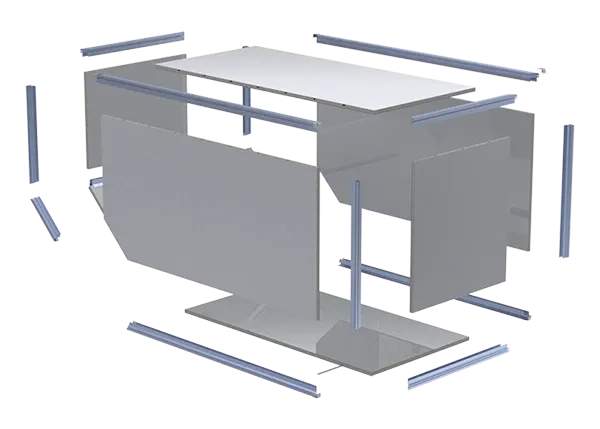
What about super singles?
Many expedition buyers want to replace the factory dual rear wheels with a super-single configuration. That change can’t be treated as cosmetic. A proper package requires consideration of:
- Tire load rating
- Wheel rating
- Axle rating
- Front/rear track width
- Wheel offset
- Steering clearance
- Suspension
- Spare-tire strategy
- Overall vehicle width
- Gearing / effective tire diameter
The correct tire package depends on the exact F-550 or Ram configuration and the completed vehicle weights.
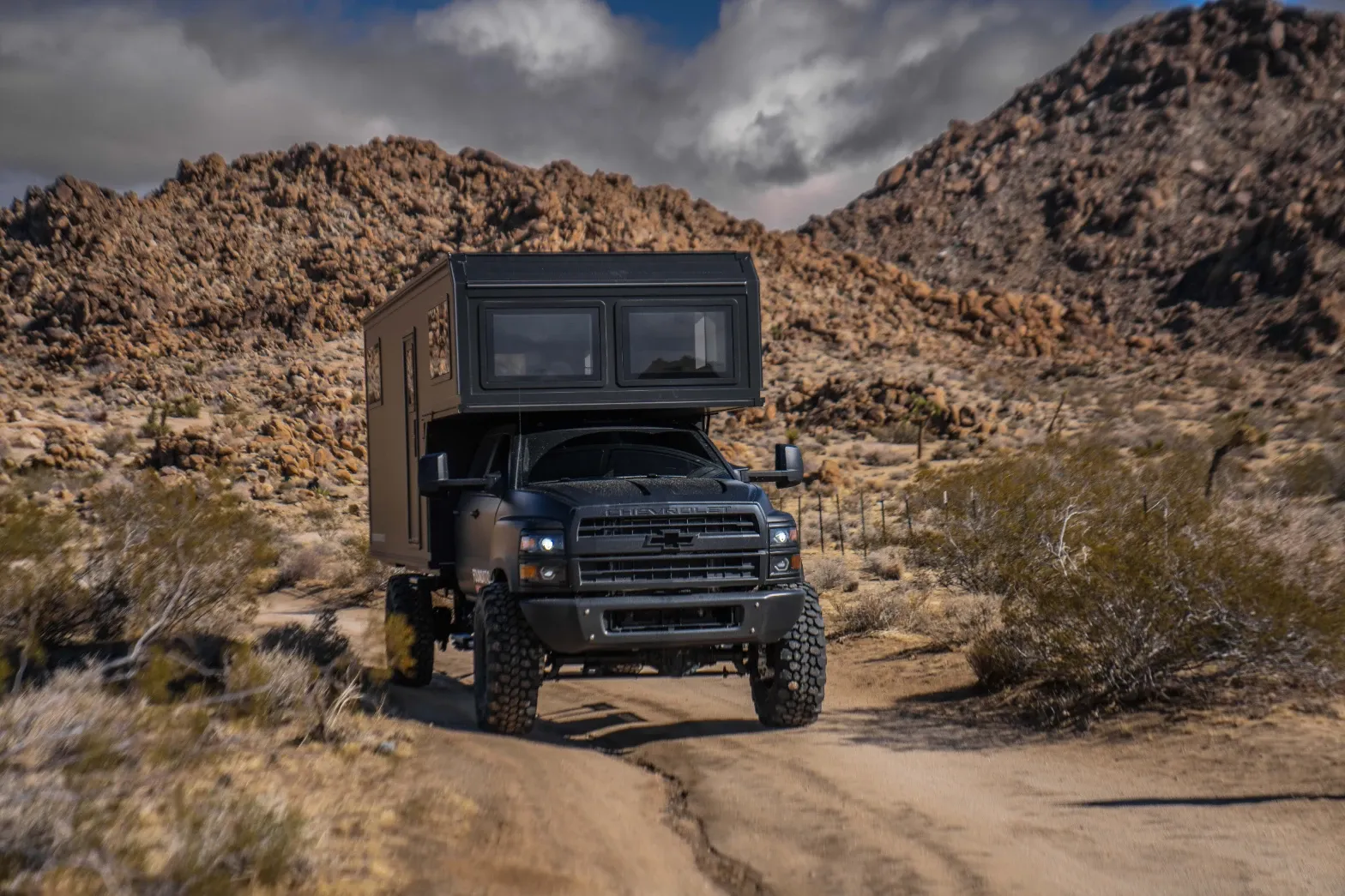
When the F-550 may make more sense
Choose the Ford when:
- The SuperCab configuration solves your packaging particularly well.
- You prefer Ford’s commercial chassis ecosystem.
- The available F-550 wheelbase/cab configuration places the axle exactly where the habitat design needs it.
- You specifically want the Ford gas or Power Stroke drivetrain.
- Your preferred suspension, wheel or service strategy already centers around Ford.
When the Ram 5500 may make more sense
Choose the Ram when:
- You specifically want the Cummins powertrain.
- One of Ram’s cab-to-axle configurations matches the body geometry particularly well.
- Available high-capacity fuel configurations matter to your travel plan.
- Your preferred suspension or super-single package is better developed around the Ram chassis.
- You simply prefer the Ram commercial-truck ownership ecosystem.
When neither is the correct chassis
A 19,500-lb GVWR Class 5 chassis isn’t automatically the right answer simply because it’s a large truck.
If the intended habitat, passengers, water, fuel, garage, motorcycles and equipment push the design too close to axle or GVWR limits, the answer may be to move up a chassis class — not make the F-550 or Ram 5500 work harder.
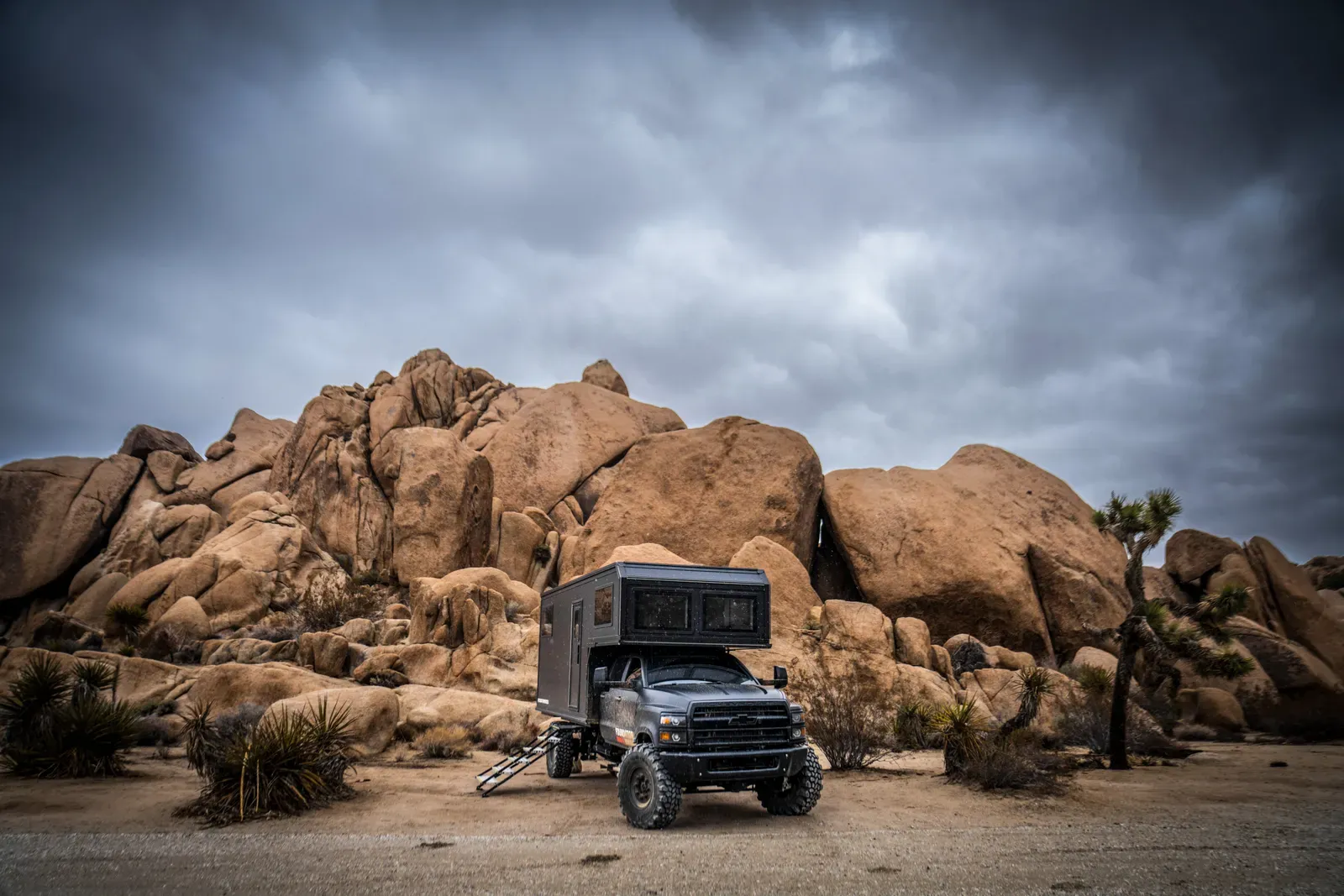
Foundation also builds on Chevrolet medium-duty and heavier expedition platforms.
Bottom line
The F-550 versus Ram 5500 decision should be made with a dimensional drawing and a weight budget, not brand loyalty. Both give Foundation an excellent Class 5 base.
Choose the chassis configuration that places the axles, cab, drivetrain and capacities where your particular expedition body needs them. That’s the answer we’d give before cutting the first panel.
Common questions
Questions people ask
Is the F-550 or Ram 5500 better for an expedition camper?
Neither universally. Both can be excellent Class 5 platforms. The better choice depends on the exact cab, wheelbase/cab-to-axle configuration, powertrain, finished weight and habitat geometry.
Which has more payload?
Do not compare only advertised maximum payload. Actual payload changes with cab, engine, drivetrain, wheelbase and installed equipment. Evaluate the exact chassis and axle ratings.
Do both reach 19,500-lb GVWR?
Yes, properly configured versions of both F-550 and Ram 5500 can reach approximately 19,500 lb GVWR.
Which is better for super singles?
That depends on the specific wheel/tire conversion, track width, suspension, axle ratings and completed vehicle weight. Neither chassis should receive a generic super-single recommendation without engineering the complete package.
Gas or diesel for an expedition truck?
It depends on annual mileage, weight, towing, engine-braking preferences, emissions-system tolerance, fuel availability and travel plans. Foundation does not treat one fuel type as universally correct.
How long can the camper body be?
Body length depends on cab configuration, wheelbase/cab-to-axle dimension, rear overhang, axle loading, departure angle and intended vehicle length. It should be engineered around the exact chassis.
When should I step up beyond an F-550 or Ram 5500?
When the intended body, water, fuel, passengers, garage, equipment or towing requirements push the design too close to Class 5 axle or GVWR limits.
Compare the platforms
Platforms discussed in this guide
Both are Class 5 bases for a custom composite expedition body — and there’s a class above.
Related