Foundation Vehicles

The engineering

Better by design, down to the material

Most of what makes a Foundation body better is what you never see — the foam in the wall, the way the panel is bonded, the extrusion at every corner, and the subframe under the floor. Here is the engineering behind it, and why every choice was made.

The four things that matter

Four choices behind every body

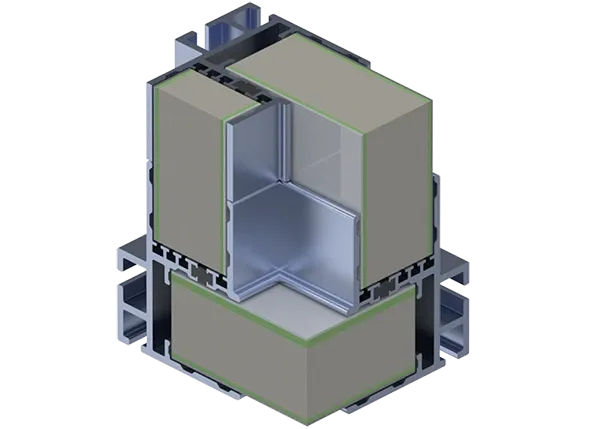
Cutaway render of a composite wall corner — a closed-cell foam core between composite skins, joined by a thermal-break extrusion

Structural insulated panel (SIP)

A one-piece composite panel — no wood, anywhere

The wall, roof, and floor are structural insulated panels: a rigid foam core bonded between tough composite skins into a single, monolithic piece. There is no wood frame inside to rot, no studs to telegraph cold, and no cavities to trap water. The panel carries load on its own, so the body is light, square, and stiff — a solid surface to build against instead of a hollow box you have to reinforce.

  • 100% inorganic and fire-retardant — nothing in the wall can rot, mold, or absorb water
  • Composite skins over a rigid foam core, bonded into one structural piece
  • Two thicknesses: a 1.5-inch panel for vans and the E-Series, a 2.5-inch panel for medium- and heavy-duty trucks
  • Flat, true 90° walls with integrated mounting — every inch is build-ready
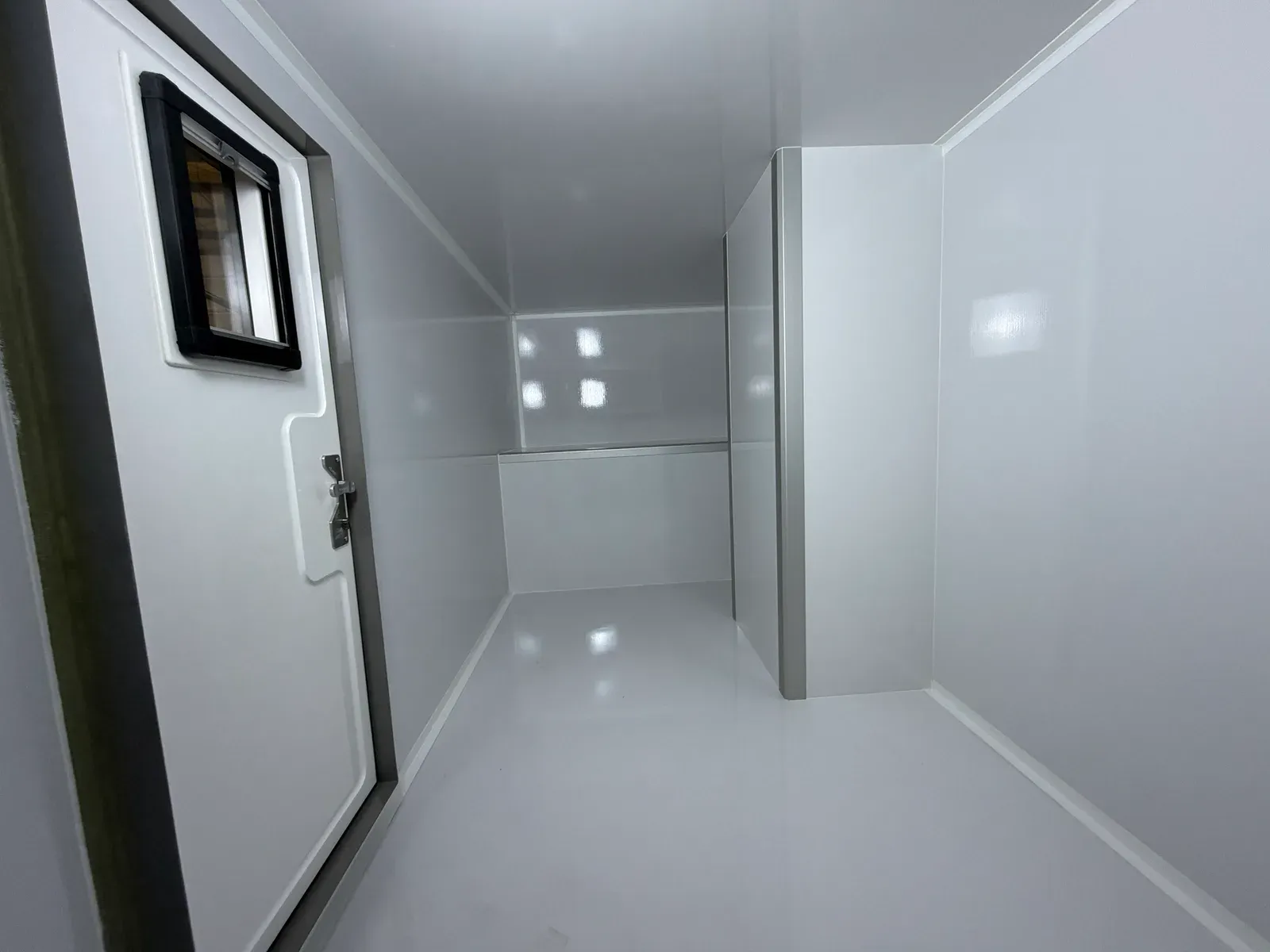
The full length of a finished white composite body — bright, seamless walls, a locking entry door with window, and a glossy wipe-clean floor

Polyisocyanurate insulation

PIR foam — the best-performing core we could put in a wall

The core is closed-cell PIR (polyisocyanurate) foam. It is not the cheap, spongy foam you find in most RV walls. PIR delivers a higher R-value in less thickness, holds its performance across a much wider temperature range, absorbs no water, and is inherently fire-retardant — while still being light and genuinely structural. That combination is why our 1.5-inch van panel reaches a continuous R11, with no thermal-bridging frame cutting through it.

  • Higher R-value per inch than the foams used in typical campers — more insulation in a thinner wall
  • Closed-cell — it can’t absorb water, so it won’t lose R-value over time
  • A wide service-temperature range — steady performance from desert heat to alpine cold
  • Inherently fire-retardant, rigid, and structural — not soft, squishy filler
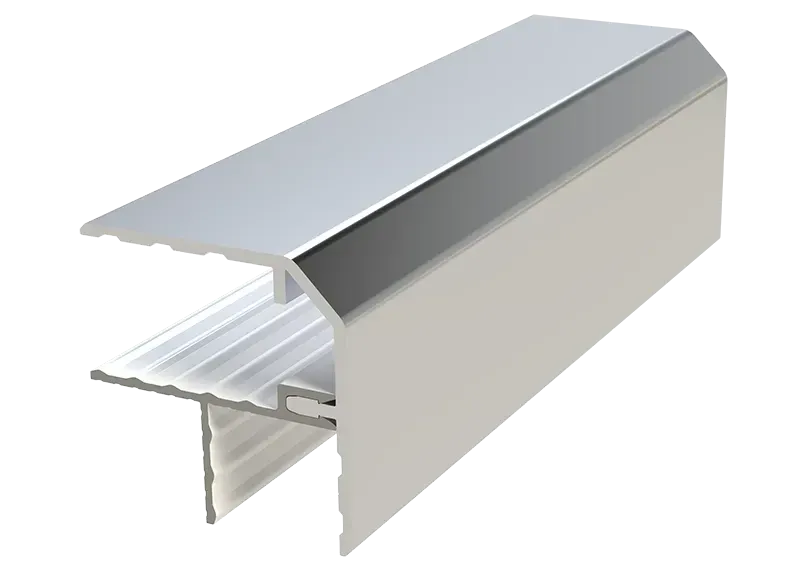
Close-up render of the hybrid aluminum-and-PVC corner extrusion used at every edge of a Foundation body

Hybrid aluminum + PVC co-extrusion

A thermal-break AL+PVC extrusion at every edge

Aluminum is strong, but on its own it is a thermal highway — cold walks straight through it and condenses inside the wall. Our edges and corners use a hybrid aluminum-and-PVC co-extrusion that breaks that path: the PVC interrupts the metal so heat can’t bridge across it. The result is less condensation inside the wall, a higher effective R-value, and a cleaner, stronger joint than a plain pultruded edge.

  • Breaks the thermal bridge that lets cold and condensation through a plain aluminum edge
  • Raises the wall’s real-world R-value and keeps the inside of the panel dry
  • A stronger, more precise corner than a standard pultruded extrusion
  • The same engineered edge system ties the whole body together
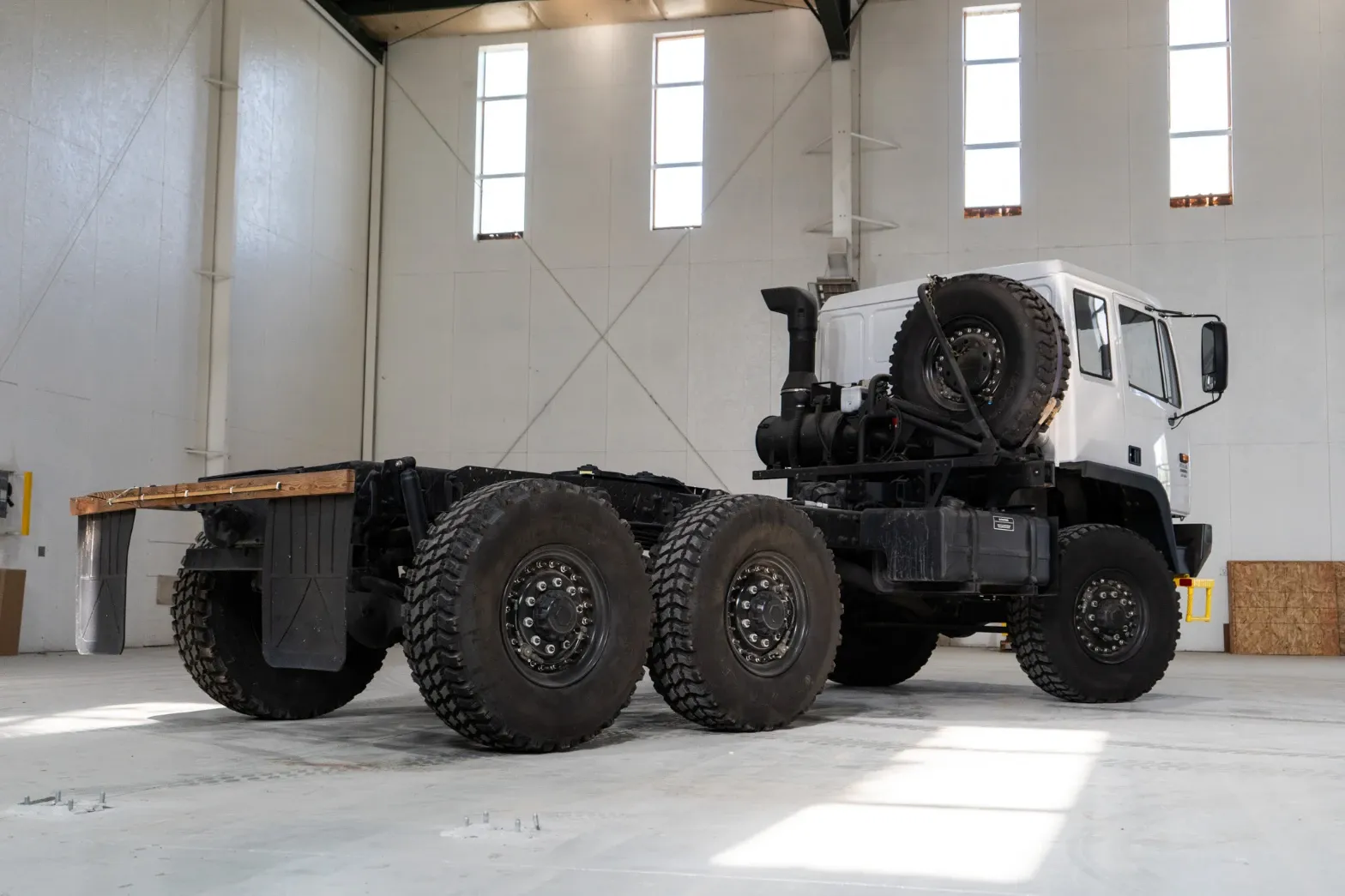
White 6x6 truck chassis, rear three-quarter view showing the bare frame ready for a body

Torsion-reducing (Zero-Torsion) subframe

A subframe that lets the truck flex — so the body doesn’t

A truck frame twists over rough ground. Bolt a rigid box straight to it and that twist goes into the body — cracked walls, sprung doors, leaks. Our torsion-reducing subframe sits between the two and pivots, letting the chassis articulate over the terrain while the composite body stays square and stress-free. On the E-Series it allows up to 22° of flex. It is built to outlast the truck: pivots on bronze bushings and chromoly pins, hot-dip galvanized and epoxy-coated against corrosion.

Why PIR

How PIR stacks up against the usual RV foams

Most campers insulate with XPS, EPS, or spray foam because it’s cheap. Here’s why we spend more on a closed-cell PIR core instead — the same reasons a commercial building uses it on the roof.

How PIR foam compares to XPS and EPS across insulation properties
PropertyPIR (what we use)XPSEPS
R-value per inch Highest Moderate Lowest
Water absorption None — closed-cell Low Higher
Fire resistance Inherently fire-retardant Burns / melts Burns / melts
High-temp performance Wide range, stable Softens sooner Softens sooner
Structural rigidity High Moderate Low

General material properties — the point is simple: PIR gives more insulation, in less thickness, that holds up to heat, water, and fire better than the foam in a typical camper wall.

How it’s engineered

Engineered, tested, then built

The materials only matter if the whole body is put together right. Every Foundation body is designed and validated the same way.

Simulated and stress-tested

Designs are modeled and FEA stress-tested before they’re built, then proven against real-world miles and terrain.

Bonded and sealed for redundancy

Panels are joined with integrated, redundant adhesive-sealed joints — sealed in more than one way, so a single failure point can’t let water in.

Built to tolerance

Tolerance studies and integral mounting brackets mean parts fit the first time and the same way every time — repeatable and consistent.

Corrosion-protected throughout

Structural metal is galvanized and coated so the parts you can’t see don’t quietly rust out under the body.

Final-stage manufactured

We install the body as a final-stage manufacturer to FMVSS and OEM requirements, so what leaves the shop is road-legal and titled.

Made in Golden, Colorado

Designed, built, and installed in-house on the Colorado Front Range — tested where the weather actually tests it.

Start a project

Want the engineering detail for your build?

Tell us the chassis and how you’ll use it and we’ll walk you through the panel spec, insulation, subframe, and options that fit — and send the full 2026 spec pack.

The message form loads once you allow analytics cookies. You can also email info@foundationvehicles.com or call 720-610-1562 any time.