Foundation Vehicles

Box van & cutaway camper bodies

Purpose-Built Box Van & Cutaway Camper Bodies

Foundation Vehicles manufactures insulated composite camper bodies for cutaway chassis — the Ford Transit, Mercedes-Benz Sprinter and Ford E-Series — and integrates each body with the chassis as the final-stage manufacturer. A cutaway chassis lets a purpose-built, square composite habitat replace the conventional cargo-van body, so the camper is designed as a structure from the start.

Buyers search for this as a box van camper, box van RV, cutaway camper or box-style camper. This page explains what those terms mean, how a cutaway camper differs from a cargo-van conversion, and which chassis Foundation builds on.

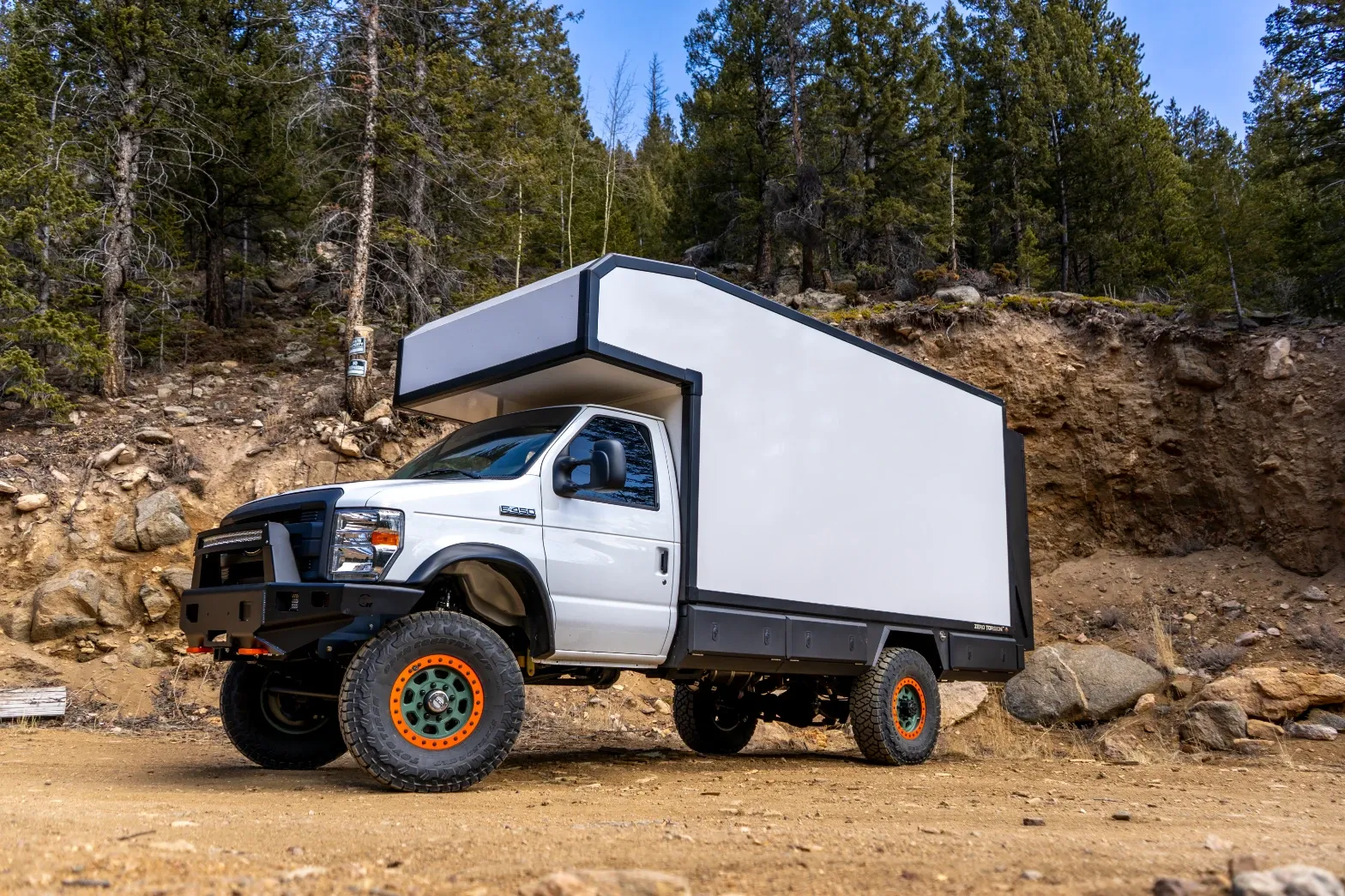
White Ford E-450 4x4 E-Series composite box camper parked on a forest dirt road, front three-quarter view showing the cab, off-road bumper and beadlock wheels

The terms, explained

What people mean by “box van camper” and “cutaway camper”

These phrases overlap. Here is how they map onto what Foundation builds — and what a Foundation body is and isn’t.

Box van camper / box van RV
A camper whose living space is a square, box-shaped body mounted behind the cab of a van-style chassis, instead of the curved sheet-metal body of a cargo van. Foundation manufactures and installs the body; you or your professional builder finish the interior.
Cutaway camper
A camper built on a cutaway chassis — a cab with a bare frame behind it — so the habitat is a separate body installed on the chassis. Foundation offers the Ford Transit 350/350HD, Mercedes-Benz Sprinter 3500XD and Ford E-Series E-350/E-450 this way.
Box-style camper / box-style motorhome / composite box camper
Everyday names for the same square-bodied layout. “Composite” describes how Foundation builds the box: an insulated structural composite panel with a closed-cell foam core and no wood in the walls.
Cutaway camper body
The body itself — the structural, insulated shell Foundation supplies and installs. See the full category on the composite camper bodies page.

A Foundation body is the structural habitat, not a finished interior. Cabinetry, electrical, plumbing and HVAC are completed by you or your builder.

Two ways to start

Cargo-van conversion vs. a cutaway with a purpose-built body

A traditional van conversion builds an interior inside a factory cargo van. A cutaway camper starts with only the cab and frame and adds a purpose-built composite body behind it, so the habitat is a square, insulated structure from the beginning.

Starting from a cargo van compared with starting from a cutaway and a Foundation composite body.
Feature Cargo-van conversion Cutaway + Foundation composite body
Starting point A finished factory cargo van A cutaway chassis: the cab and a bare frame
Walls and roof Curved, ribbed metal that is furred out and squared up before the real build begins Flat walls and true 90° corners, with integrated mounting
Insulation Typically uninsulated from the factory; added during the build Continuous R11 insulation in a 1.5-inch composite panel
Interior size Set by the van’s body shape 7-foot interior height and 80.5-inch interior width, with Foundation bodies from 72.5 to 95.5 sq ft of walkable floor
Cab connection Depends on how the conversion is built 36-inch cab-over with a full cab-to-habitat passthrough

For buyers considering a traditional van conversion, a cutaway chassis with a purpose-built composite body provides another approach: the driving platform remains familiar while the habitat is designed from the beginning as a square, insulated structure.

Foundation manufactures the structural body and performs the chassis integration and final-stage manufacturing. The interior fit-out is done by you or your builder.

Interior space

Why square walls create more usable interior volume

A box body’s walls rise straight up from the floor. The whole floor width stays usable at full height, and cabinets, benches and equipment mount against a flat surface instead of being shimmed to curved metal. In a cargo van the walls and roof curve inward, so the same footprint gives up usable volume at the edges.

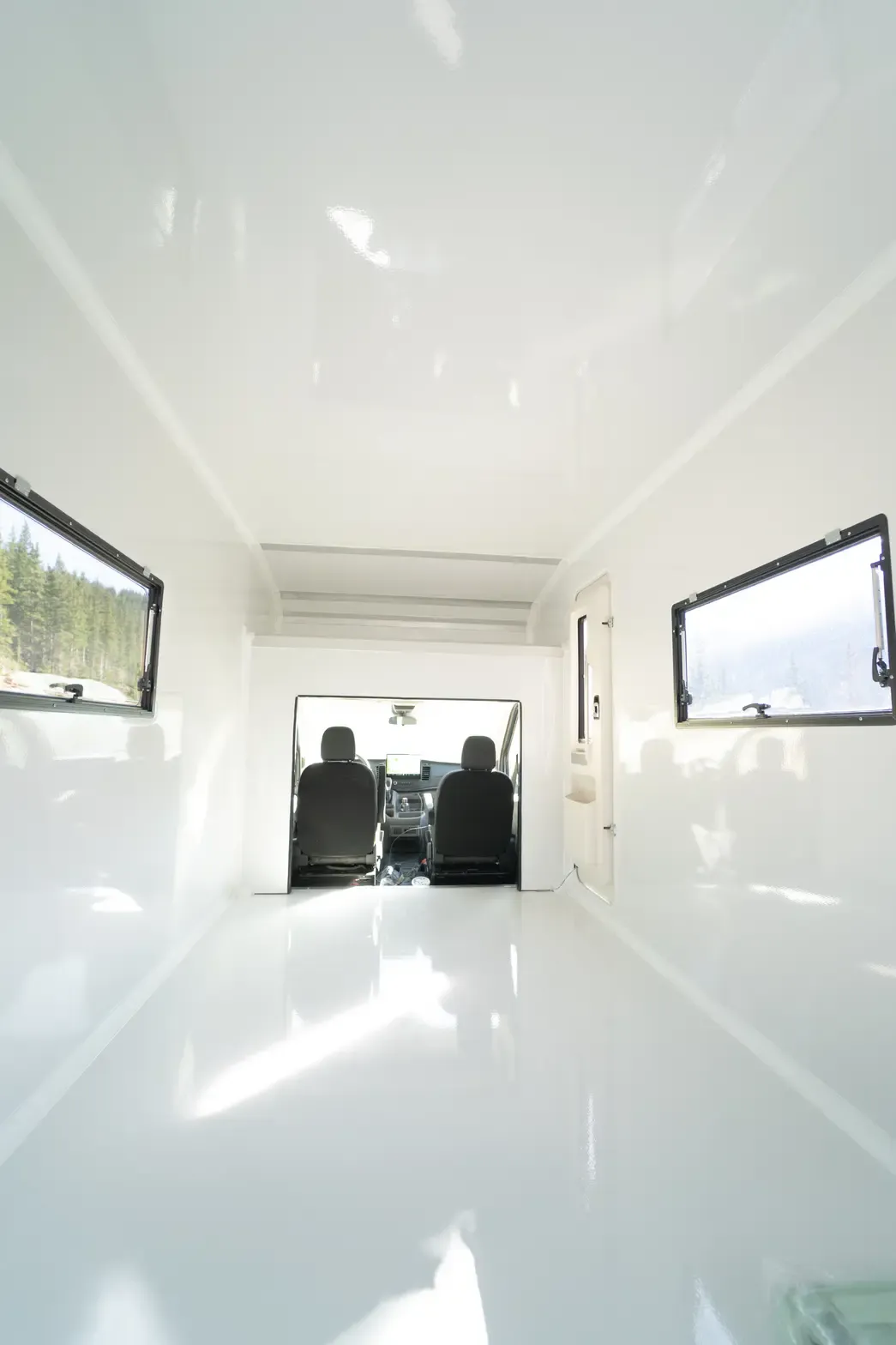
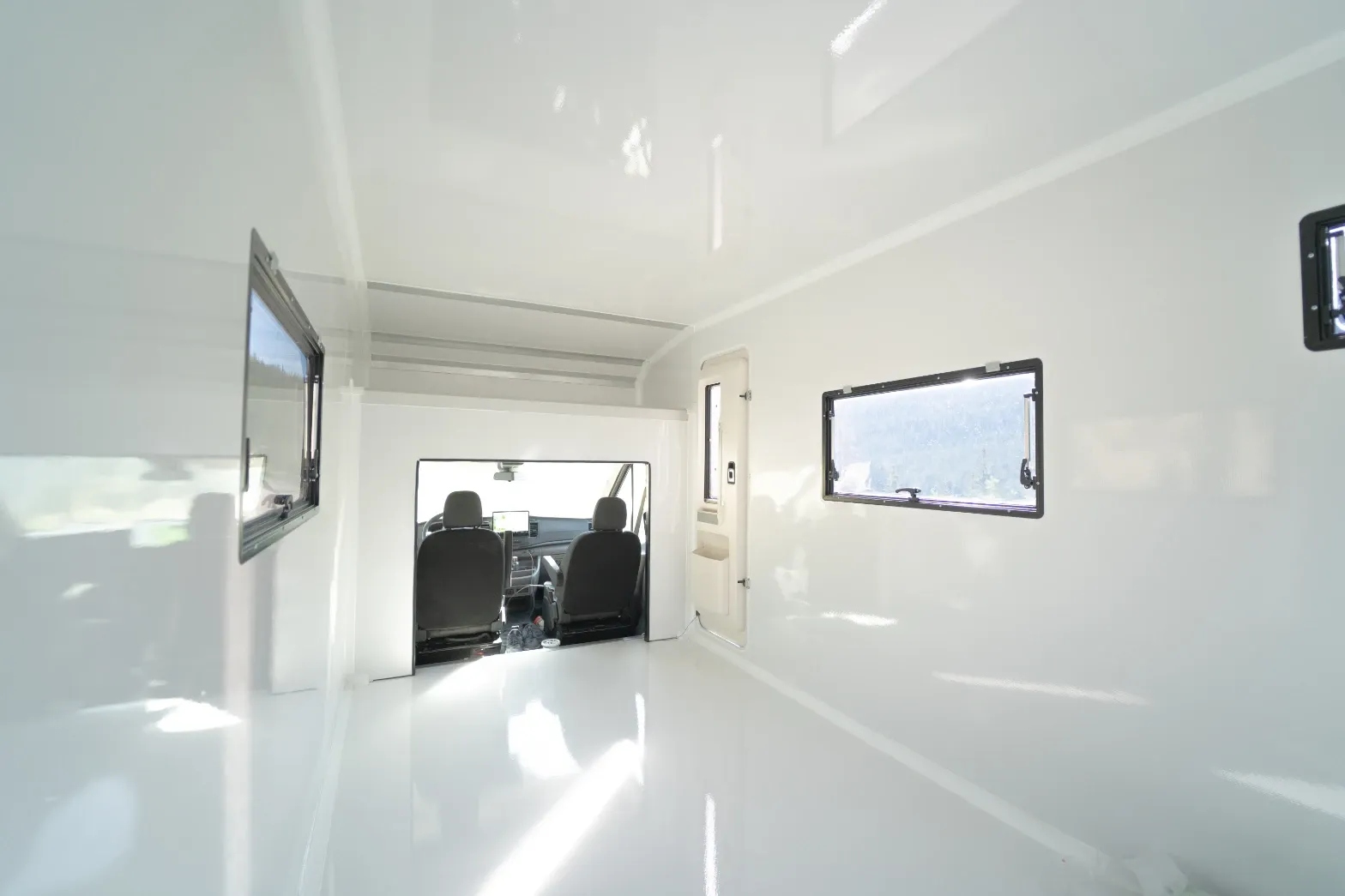
Foundation bodies have a 7-foot interior height and an 80.5-inch interior width with flat, 90° walls and integrated mounting built into the panel, which makes the interior faster to plan and to build. The size you choose sets the floor area — see the body sizes on each platform page below.

Interior of a bright white composite body looking toward the cab pass-through, with awning windows open on both walls

Cutaway platforms

Ford Transit, Mercedes-Benz Sprinter and Ford E-Series cutaways

The composite body construction is the same across the cutaways; the chassis underneath is what you choose. Foundation lists these configurations today.

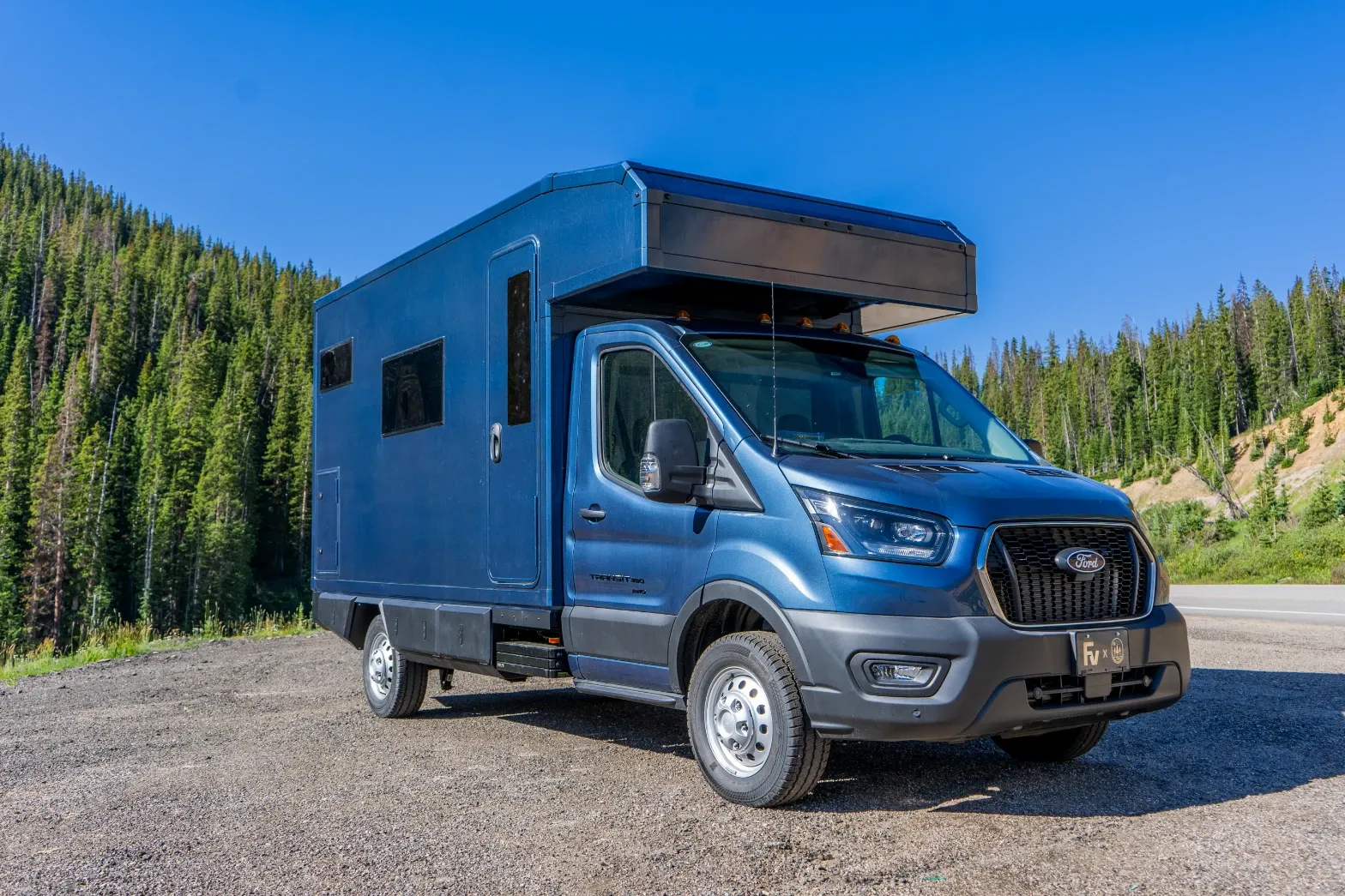
Blue composite camper on a Ford Transit AWD chassis, parked on a forest road in the Colorado high country

Ford Transit cutaway

  • Transit 350 / 350HD cutaway
  • Bodies: FV-138, FV-156, FV-178
  • 72.5–95 sq ft of walkable floor
  • Gasoline V6, AWD available
  • Up to 11,000 lb GVWR

A good fit for buyers who want a gasoline chassis, factory AWD and a choice of three body lengths, including the mid-size FV-156.

Ford Transit cutaway camper bodies
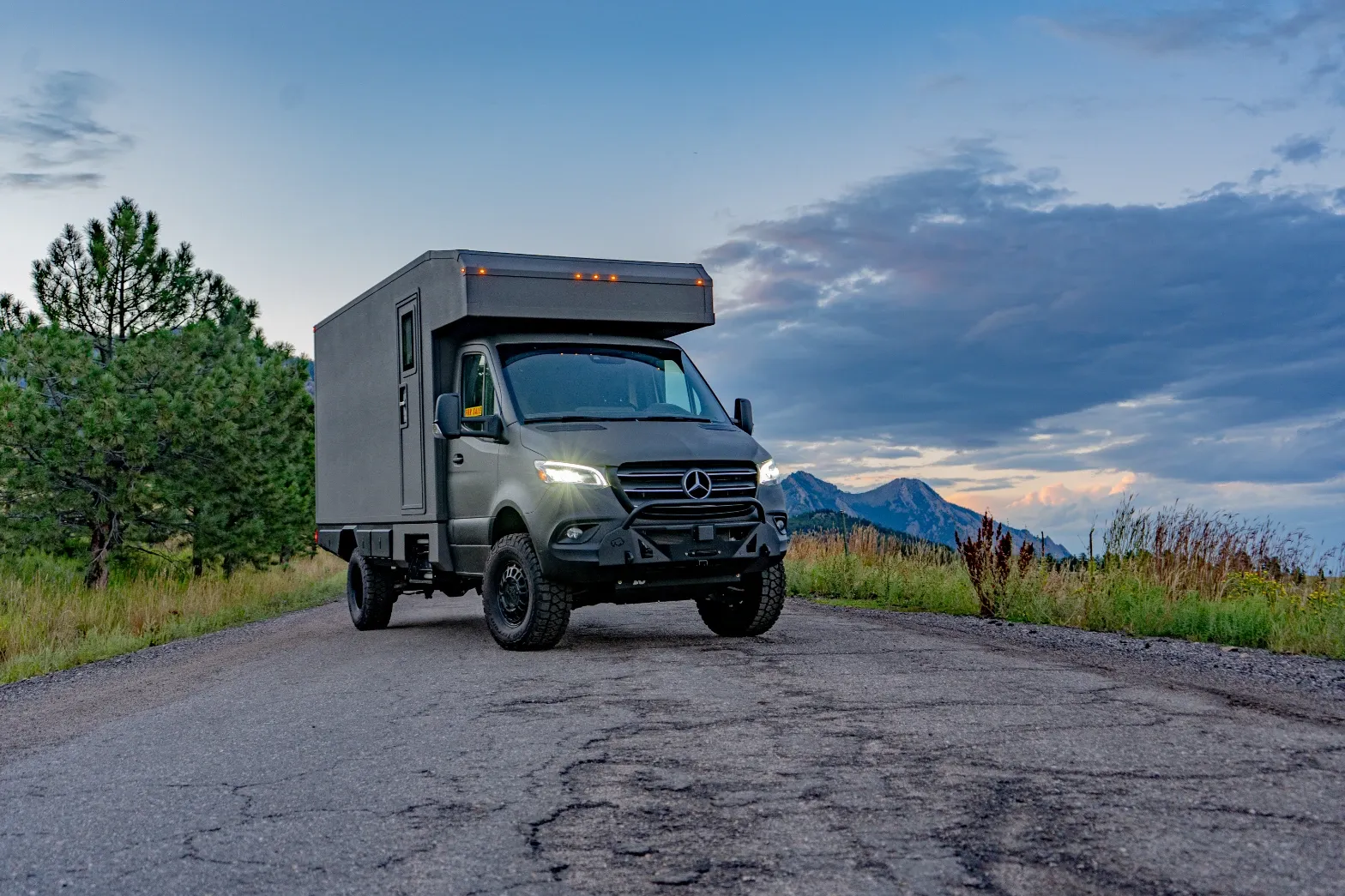
Matte-olive Mercedes-Benz Sprinter AWD composite camper at dusk with mountains behind

Mercedes-Benz Sprinter cutaway / cab chassis

  • Sprinter 3500XD cab chassis / cutaway
  • Bodies: FV-144 and FV-170 (the Sprinter 170)
  • 73.5–95.5 sq ft of walkable floor
  • Turbo-diesel, AWD available
  • Up to 11,030 lb GVWR

A good fit for buyers who specifically want the Mercedes diesel powertrain and Sprinter cab. The FV-170 is built on the 170-inch wheelbase.

Sprinter cutaway camper bodies
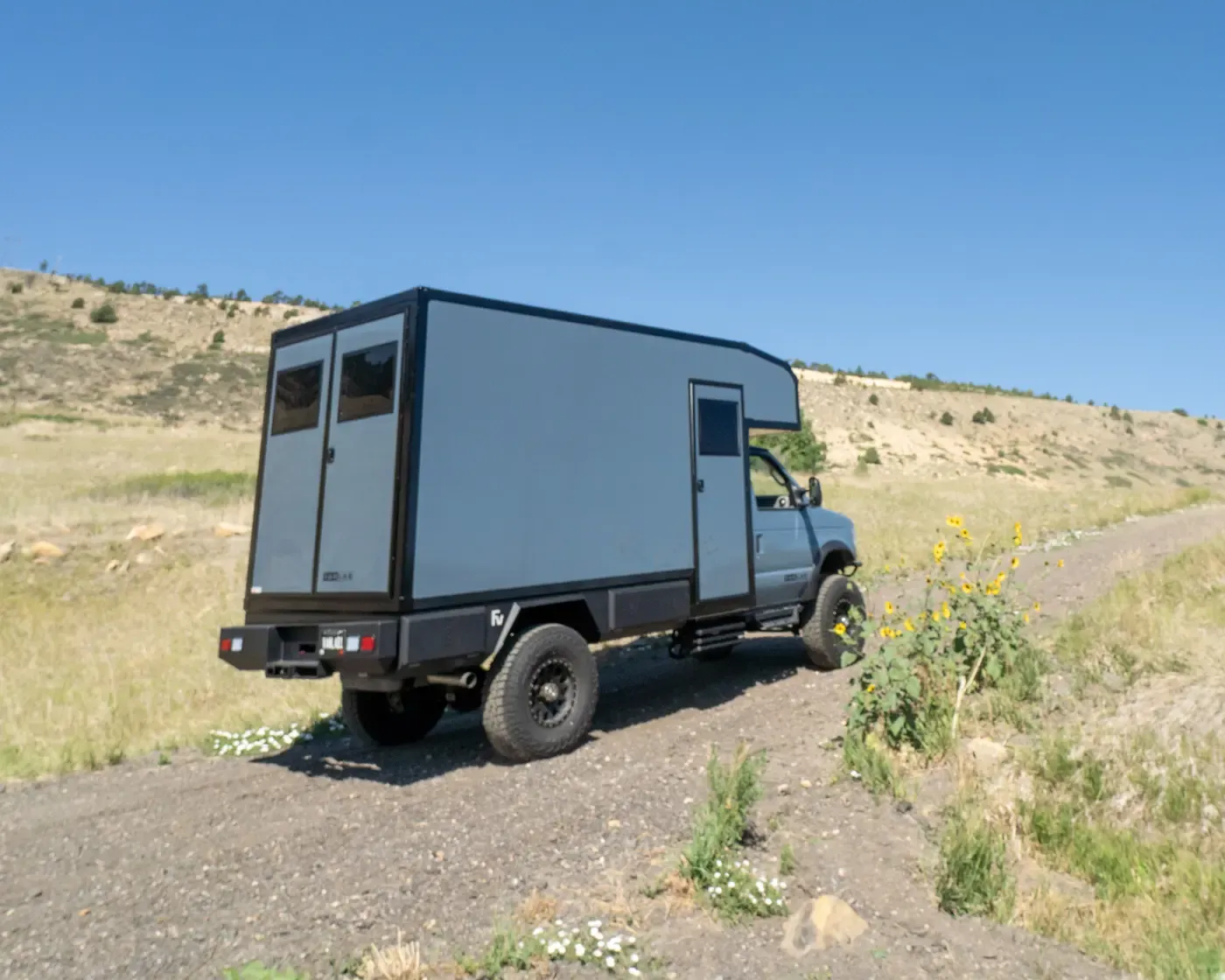
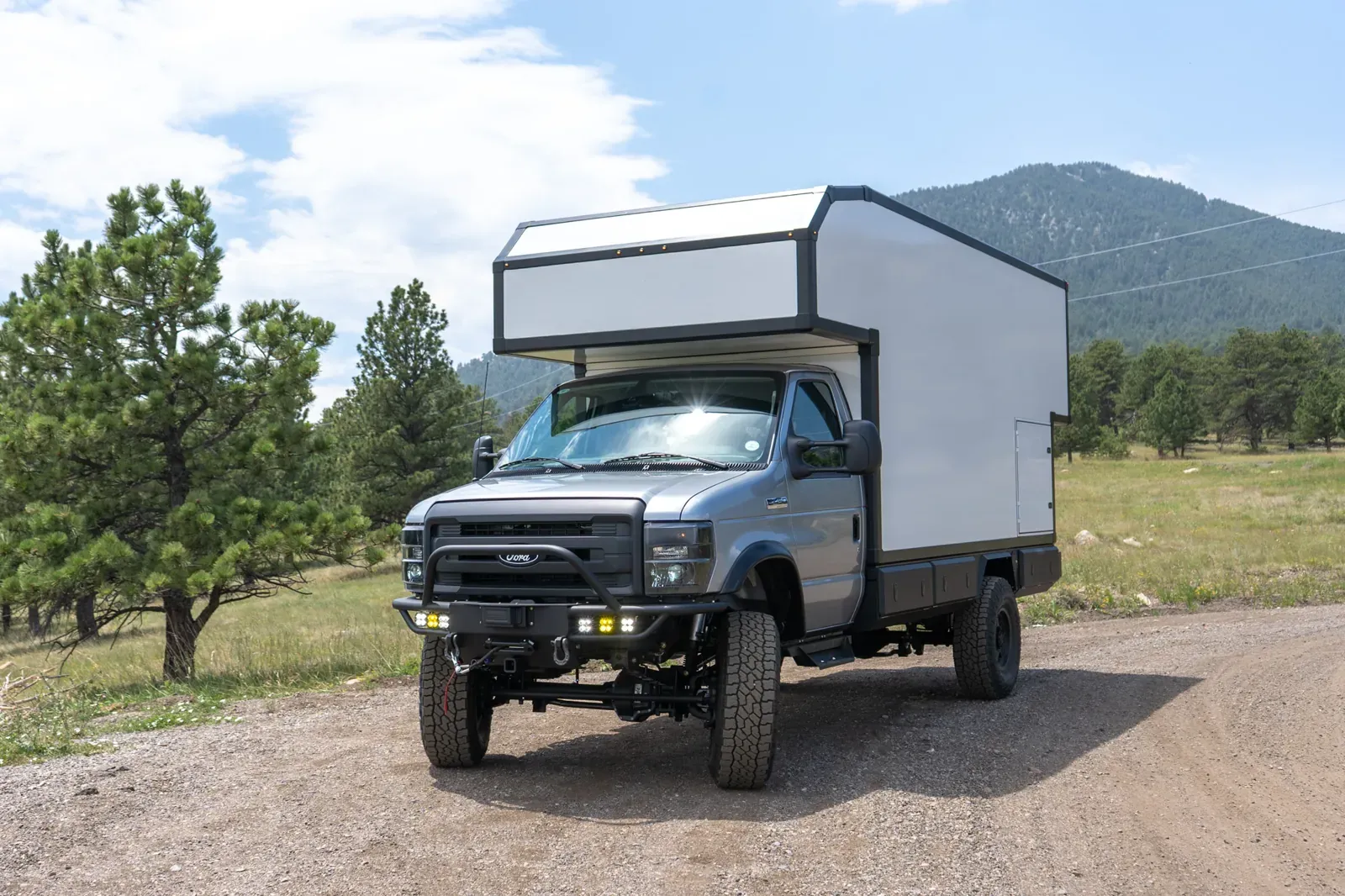
Foundation Vehicles E-158 composite box camper on the Ford E-Series 4x4 chassis, parked on a gravel road in open high country

Ford E-Series (E-350 / E-450) cutaway

  • E-350 / E-450 cutaway
  • Bodies: E-138s, E-138, E-158s, E-158
  • About 73–92 sq ft of walkable floor
  • 7.3L gasoline V8, 40-gallon tank
  • Up to 14,500 lb GVWR
  • Specialist aftermarket 4x4 conversion available

The heavier-duty, more truck-like option, with the Zero-Torsion subframe. It begins as a rear-wheel-drive cutaway; 4x4 is a specialist conversion.

Ford E-Series and E-450 camper bodies

Choosing between them? These guides compare the chassis directly:

The same approach scales to trucks: medium-duty expedition bodies use a thicker 2.5-inch panel on a four-point subframe, custom-sized to the chassis.

How the body is built

Composite construction, insulation and thermal bridging

A Foundation body is a one-piece composite structural insulated panel: a closed-cell PIR foam core bonded between composite skins, joined at the edges with a thermal-break aluminum-and-PVC extrusion. The panel carries load itself, so the body is light, stiff and square.

Composite body construction

The walls are composite with no wood in the structure, so there is no wood to rot. See composite vs. aluminum camper bodies for how the two approaches trade off.

Insulation

Every body has continuous insulation: R11 in the 1.5-inch panel on Transit, Sprinter and E-Series bodies, and R17 in the 2.5-inch panel on medium- and heavy-duty trucks. The core is closed-cell PIR foam — see PIR vs XPS vs EPS camper insulation.

Thermal bridging

Thermal bridging is heat moving through the structure around the insulation, for example along a metal stud or rib. Foundation’s wall has no metal stud frame running through it, and at the corners the PVC in the co-extrusion interrupts the aluminum so heat can’t travel straight across the joint. Thermal bridging explained.

Cab pass-through and cabover

A cab pass-through and a cabover built into the body

Foundation van and E-Series bodies include a 36-inch cab-over and a full passthrough between the cab and the habitat, so you can move from the cab seats into the living space without leaving the vehicle.

Because the cabover is part of the habitat, your interior builder can plan it for storage or a sleeping area. Medium-duty bodies add a queen or king cabover with a cab passthrough. Foundation supplies the structure; the interior layout is yours.

Interior of a white composite body looking through the pass-through to the cab

Body-to-chassis mounting

Mounting the body to the chassis and managing torsion

A chassis frame twists as it moves over uneven ground, and a stiff composite body does not. Foundation mounts every body on a subframe that manages that twist, so far less of it reaches the body.

Transit and Sprinter bodies use a torsion-reduction subframe suited to their length and duty. The Ford E-Series uses the Zero-Torsion subframe, which allows up to 22° of articulation so the frame can flex while the body stays square. Medium- and heavy-duty trucks step up to four- and five-point Zero-Torsion subframes.

No mount allows literally zero torsion; the useful question is how much twist is allowed to reach the body and how it is controlled. Read what a torsion-free camper subframe is and how 3-, 4- and 5-point subframes differ.

Camper body vs. delivery box

A purpose-built camper body vs. a commercial delivery box

A commercial delivery box is designed to carry freight. A camper body is designed to be lived in, so its structure, openings and mounting are planned around people and an interior build.

  • Continuous insulation in the structure, rather than a freight enclosure that is insulated, if at all, afterward
  • A locking entry door, windows, hatches and skylights specified for living space
  • A cab-over and a full cab-to-habitat passthrough
  • Flat walls with integrated mounting for cabinets, benches and equipment
  • A subframe engineered to isolate the body from chassis flex

The same composite construction is also available for work vehicles — see insulated composite box bodies for commercial vehicles.

Final-stage manufacturing

Why Foundation builds the body, integrates it and finishes the vehicle

Foundation Vehicles integrates the composite body with the chassis and performs final-stage manufacturing in Golden, Colorado. One manufacturer is responsible for the body, the subframe and the installation, so the parts are designed to work together.

Foundation supplies

  • The engineered, insulated composite body
  • Body-to-chassis installation on a torsion-managing subframe
  • Final-stage manufacturing to FMVSS and OEM requirements
  • Entry door, windows, hatches and passthrough as specified

You or your builder complete

  • Interior layout, cabinetry and furnishings
  • Electrical, plumbing and HVAC
  • Graphics and finishing
  • Foundation completes the vehicle as the final-stage manufacturer and provides the documentation required for titling and registration, so any professional builder can take it from there

Common questions

Box van and cutaway camper questions

What is a box van camper?

A box van camper has a square, box-shaped living body mounted on a van-style or cutaway chassis, rather than a living space built inside the curved body of a cargo van. Foundation Vehicles manufactures insulated composite box bodies for the Ford Transit, Mercedes-Benz Sprinter and Ford E-Series cutaways. You or your builder finish the interior.

Is a cutaway camper different from a cargo van conversion?

Yes. A cargo van conversion builds inside the factory cargo body. A cutaway camper starts with only the cab and frame and adds a purpose-built body, so the walls are flat, the corners are square and the insulation is continuous from the start. The cutaway is also a different starting vehicle to buy: it arrives as a cab and bare frame, and the body is part of the build.

Can a Sprinter or Transit cutaway use a composite camper body?

Yes — that is what Foundation builds. The Ford Transit 350/350HD cutaway takes the FV-138, FV-156 and FV-178 bodies, and the Mercedes-Benz Sprinter 3500XD cutaway takes the FV-144 and FV-170 (the Sprinter 170).

Why use an E450 cutaway for a camper?

The E-Series suits builds that need more chassis rating, more fuel capacity or a specialist 4x4 conversion. Foundation lists up to 14,500 lb GVWR, a 40-gallon tank, Ford’s 7.3L V8 and a Zero-Torsion subframe with up to 22° of articulation. It is a more truck-like platform, and it begins as a rear-wheel-drive chassis, so 4x4 is an aftermarket conversion. If most of your travel is paved or improved roads, an AWD Transit or Sprinter may be the better fit.

Are Foundation Vehicles bodies insulated?

Yes. Every body has continuous insulation with no metal stud frame running through the wall: R11 in the 1.5-inch panel on Transit, Sprinter and E-Series bodies, and R17 in the 2.5-inch panel on medium- and heavy-duty trucks. The core is closed-cell PIR foam.

How is the camper body mounted to the chassis?

On a Foundation subframe that sits between the chassis and the body and manages frame twist. Transit and Sprinter bodies use a torsion-reduction subframe; the E-Series uses the Zero-Torsion subframe with up to 22° of articulation; medium- and heavy-duty trucks use four- and five-point Zero-Torsion subframes.

Does Foundation build the interior?

No. Foundation supplies the structural body and installs it on your chassis. The interior — cabinetry, electrical, plumbing and HVAC — is finished by you or any professional builder.

Start a project

Build a cutaway camper on a Foundation body

Tell us the chassis you have in mind and how you plan to use it, and we'll help you choose a body size and options — and send pricing and the full spec pack. Prefer to talk? Call or email us directly.

The message form is loading. You can also email info@foundationvehicles.com or call 720-610-1562 any time.