
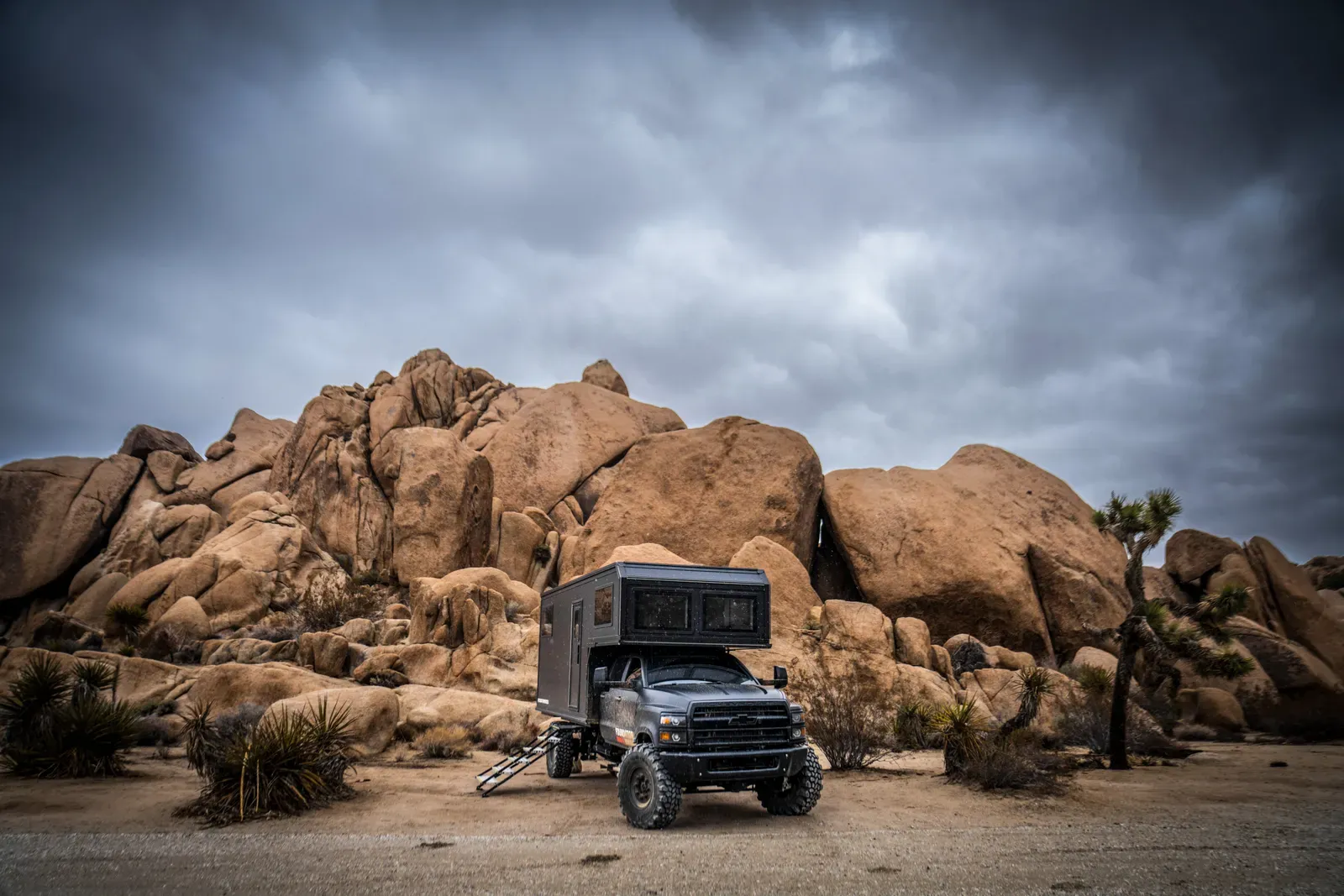
Who buys a Foundation composite camper body?
Do-it-yourself camper builders who want a finished, insulated shell to outfit; overland and adventure buyers who want a four-season habitat; commercial and specialty operators who need a clean, build-ready mobile workspace; and professional builders and manufacturers who build a repeatable product on a consistent body.
What does Foundation install versus what an interior builder installs?
We manufacture the composite body and install it on your chassis as a final-stage manufacturer — the structural shell, insulation, subframe, cab-over, passthrough, and the doors, windows, and hatches you specify. The interior — cabinetry, electrical, plumbing, HVAC, and furnishings — is done by you or your professional builder. We supply the platform; you or your builder complete the fit-out.
What chassis can the body be installed on?
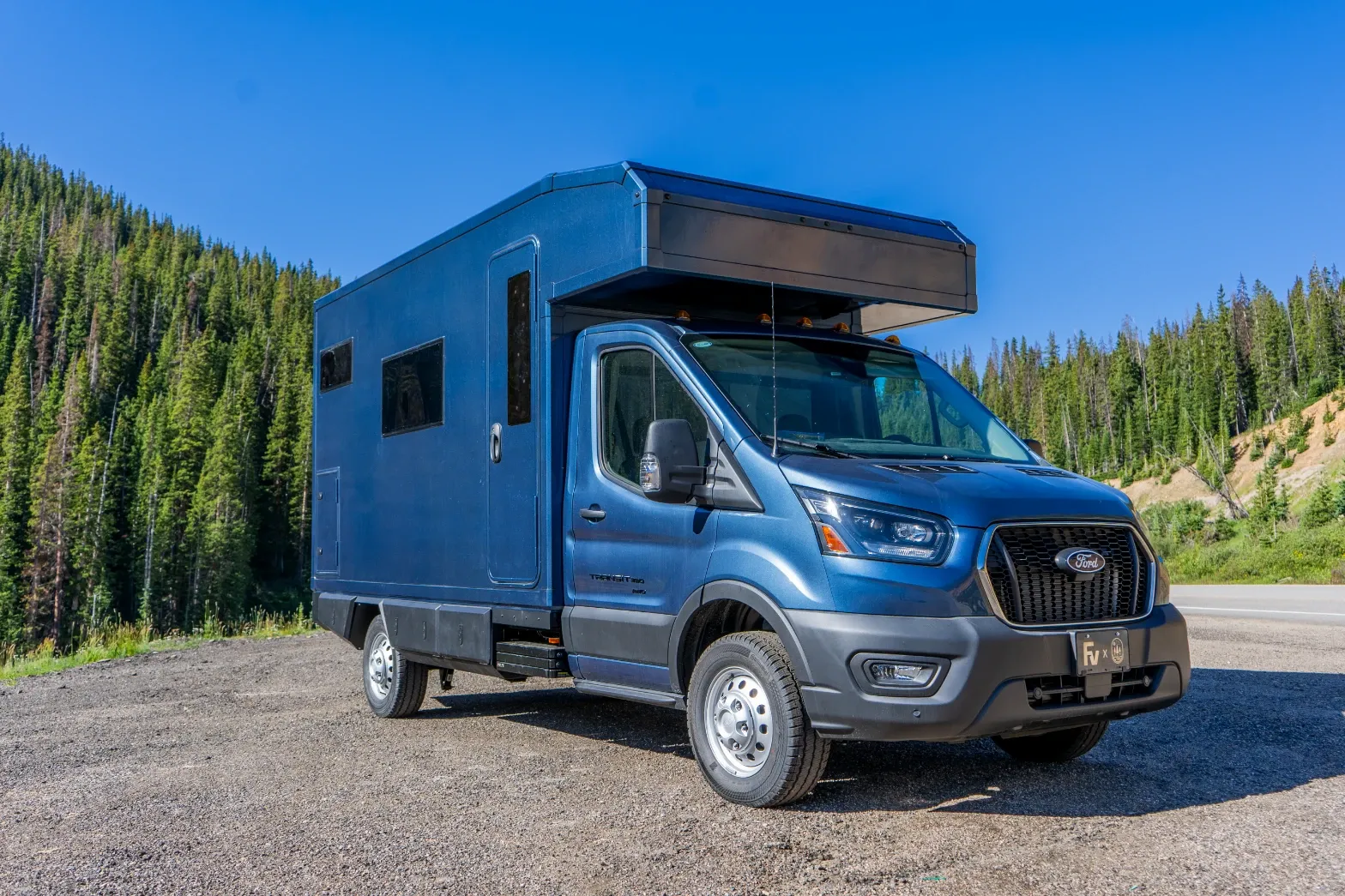
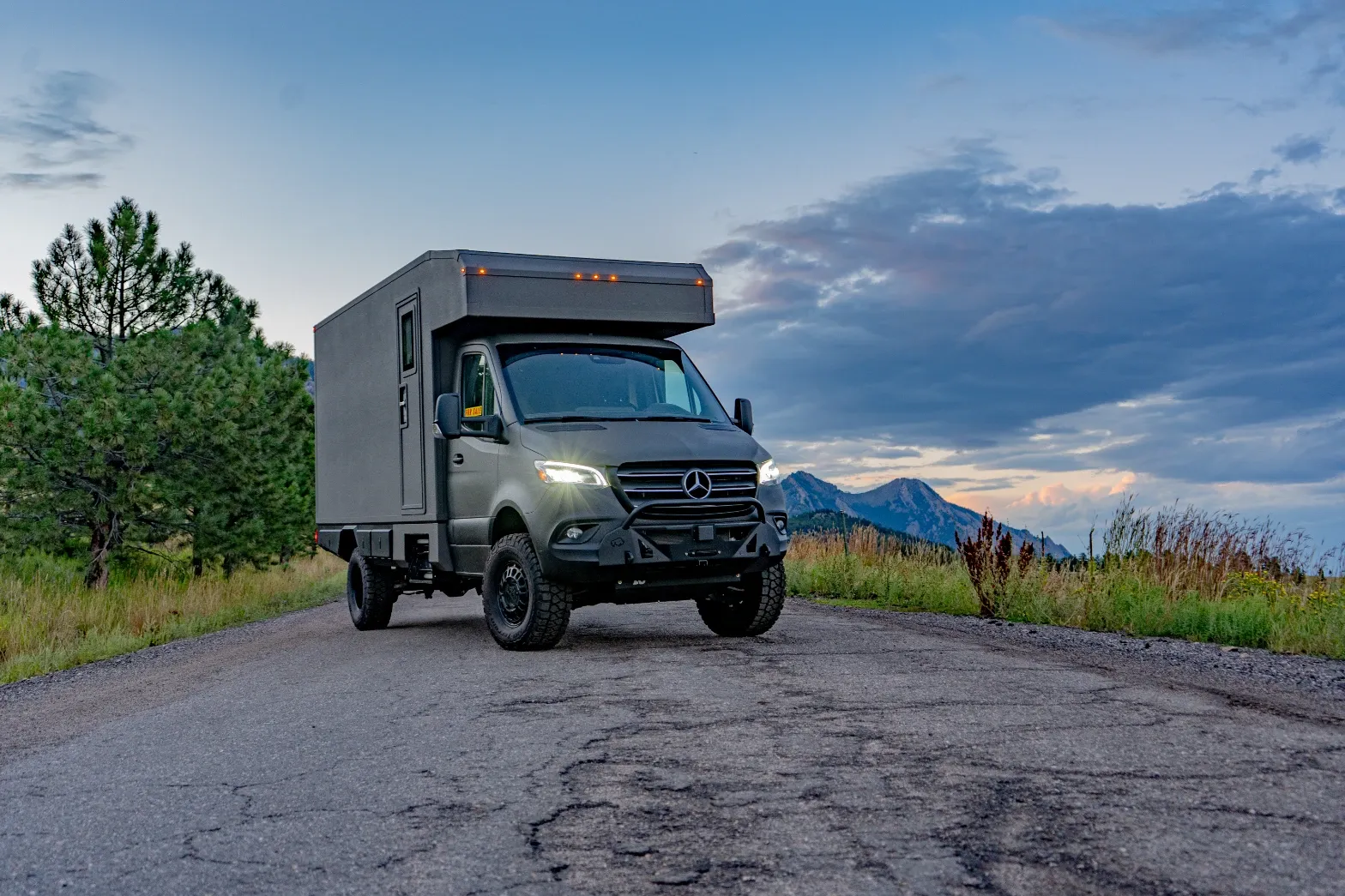
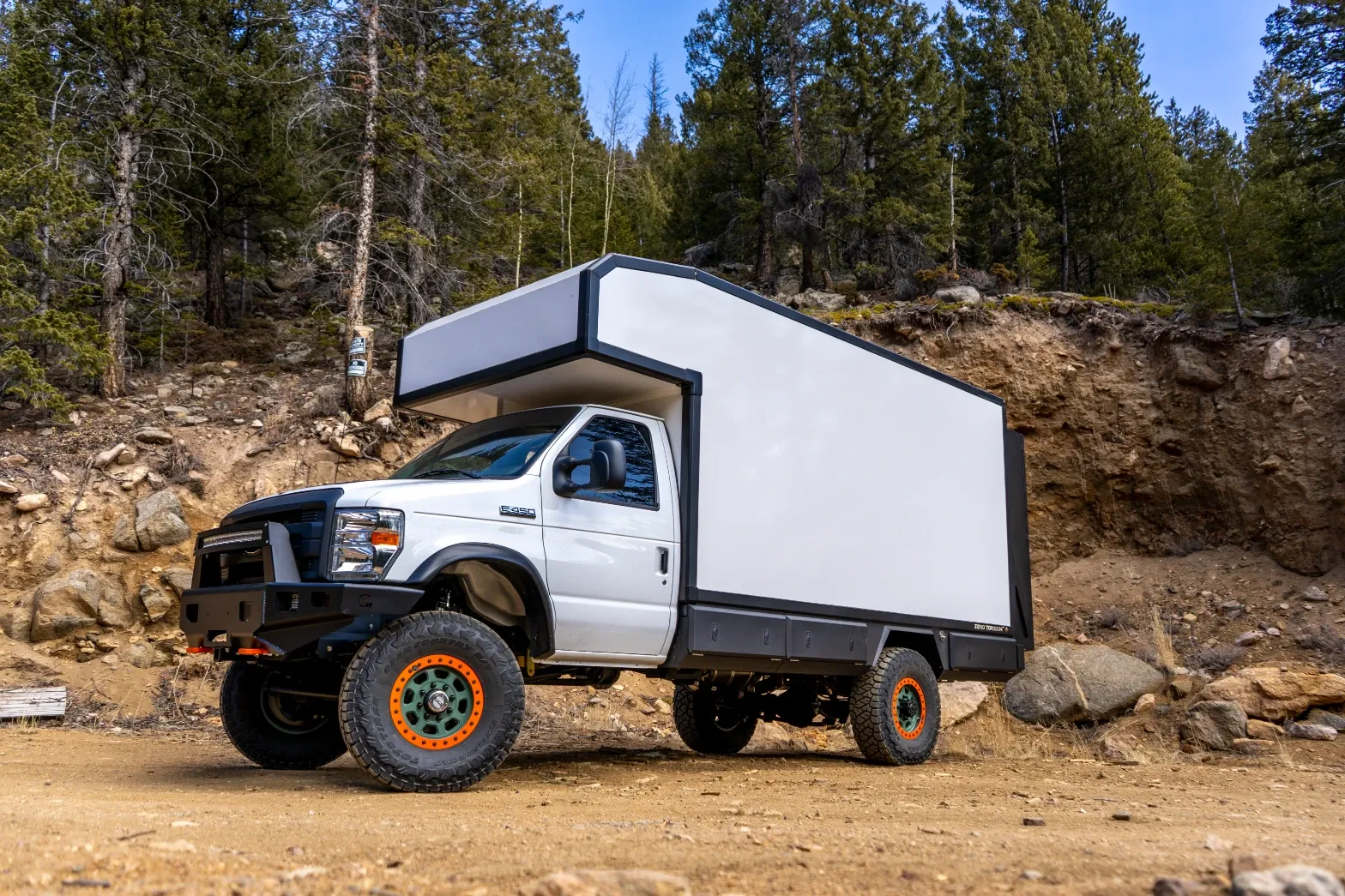
Ford Transit and Mercedes-Benz Sprinter cutaways, the 4x4 Ford E-Series (E-350/E-450), and medium- and heavy-duty trucks — Ford F-450/550, Ram 5500, Chevrolet 4500–6500, and military-grade LMTV/FMTV. If you already run a chassis, we can usually build on it.
Why composite instead of a metal or wood-framed body?
The body is a one-piece composite structural insulated panel: a rigid foam core bonded between composite skins. It carries load on its own, so it is light, square, and stiff. It is fire-retardant, with no wood to rot, absorb water, or grow mold, and no stud frame to telegraph cold through the wall.
How is it insulated?
Every body has a continuous R11 insulation layer with no thermal-bridging framework cutting through it, so it holds temperature far better than a bare metal van — warmer in the cold and cooler in the heat. The core is closed-cell PIR foam, which delivers more R-value per inch and absorbs very little water.
What makes the interior easier to upfit?
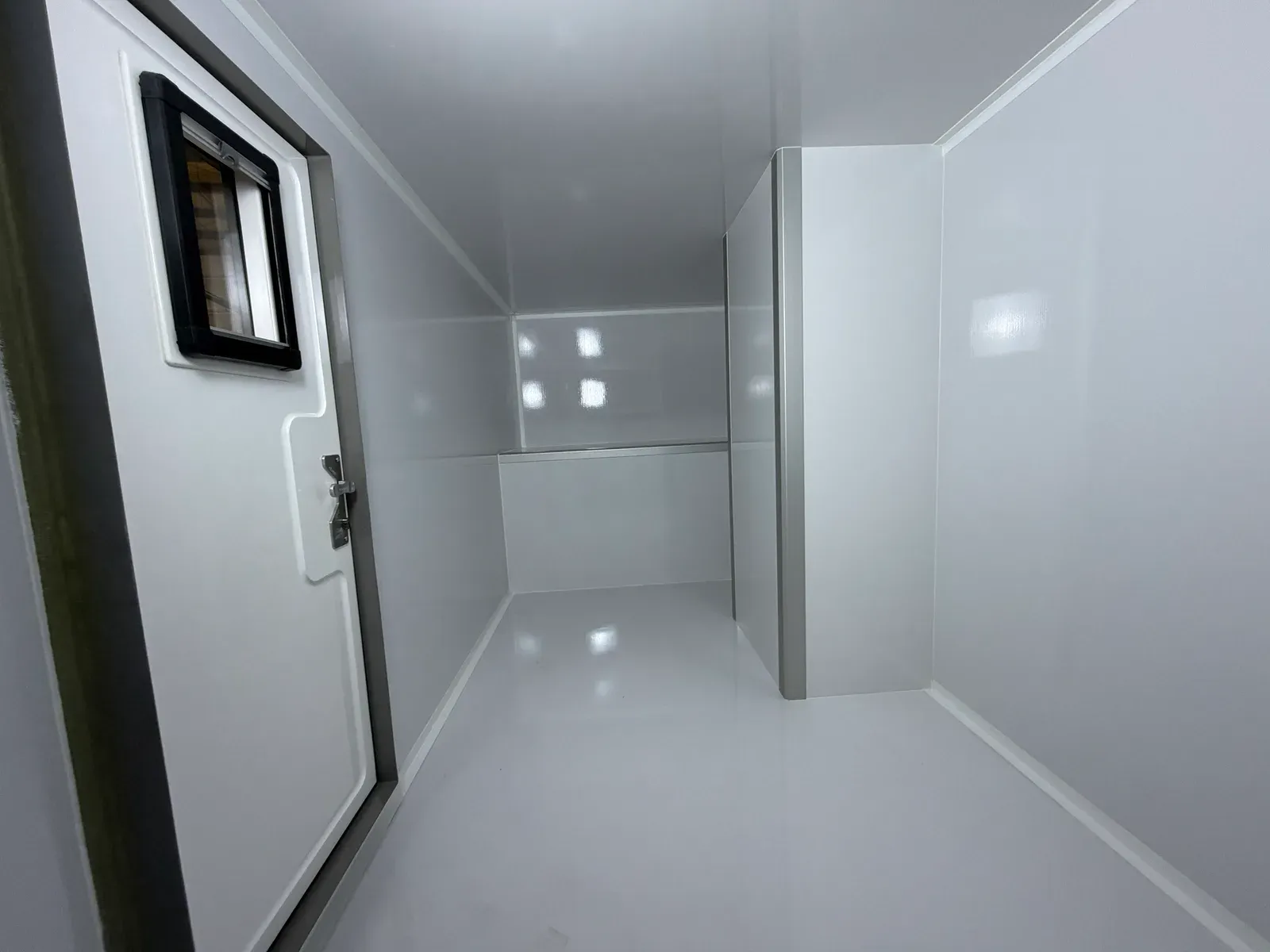
The walls are flat and truly square, with integrated mounting built into the panel. Cabinets, benches, and equipment go straight in against a solid, 90° surface — you are not shimming a curved cargo-van wall or framing out a fiberglass shell before the real build can start.
How is the body isolated from chassis flex?
A truck or van frame twists over rough ground. We install the body on a torsion-reducing subframe that pivots between the two, letting the chassis articulate over the terrain while the subframe absorbs the twist — so far less of it is transferred into the composite body and the body stays square. That is what guards against cracked walls, sprung doors, and leaks over time.
Can I finish the interior myself, or have a professional builder do it?
Either. Because the body leaves our shop road-legal and titled, you can outfit it yourself or take it to any professional builder or upfitter. Our preferred builders can finish the whole interior — electrical, cabinetry, and everything inside.
Do you work with professional builders and production customers?
Yes — that is our builder program. Outfitters and manufacturers build on our standardized composite body as a repeatable starting point and keep their interior, brand, and customer, with private-label options and support from prototype to production.
How is this different from building inside a conventional cargo van?
A cargo van curves in at the roof and walls, has no real insulation, and has to be furred out before anything goes in. A Foundation body starts square, sealed, and insulated, with true standing room and full-width space — so the usable interior is larger and the build goes in faster.