Foundation Vehicles

Commercial & specialty vehicles

Insulated Composite Box Bodies for Commercial Vehicles

Foundation Vehicles manufactures insulated composite box bodies — engineered structures for commercial, fleet and specialty vehicles — and installs them on van, cutaway and truck chassis in Golden, Colorado. It is a structural composite body, not a generic dry-freight cube or a conventional aluminum delivery box.

You may know it as a composite box body, insulated box body, van box body, truck box body or custom vehicle body. The idea is the same: a purpose-built body, integrated with the chassis, that arrives ready for your fit-out.

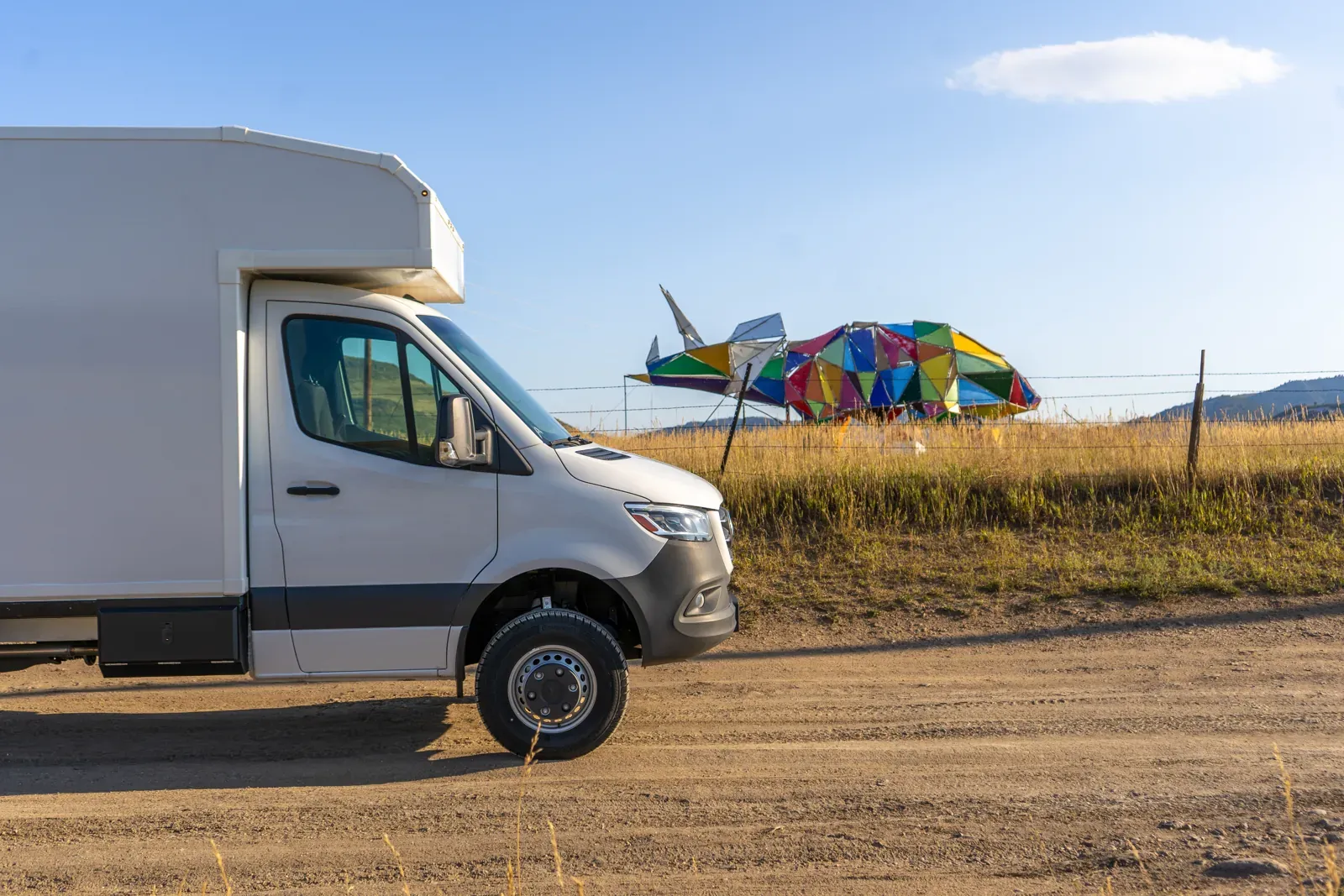
White Mercedes-Benz Sprinter 170 composite body with a roof rack, front three-quarter on a dirt road

The definition

What is an insulated composite box body?

An insulated composite box body is a vehicle body built from structural insulated composite panels — a rigid foam core bonded between composite skins — instead of a metal or wood frame covered with sheet. Foundation’s body carries continuous insulation through the wall and is installed on the chassis on an engineered subframe.

  • One-piece composite structural insulated panel (SIP) with a closed-cell PIR foam core
  • Continuous R11 insulation in the 1.5-inch panel on van and E-Series bodies, and R17 in the 2.5-inch panel on trucks
  • Thermal-break aluminum-and-PVC extrusion at the edges instead of a metal frame running through the wall
  • Flat walls and 90° corners with integrated mounting for shelving, racks and equipment

Compared

A composite box body vs. a conventional delivery box

Foundation insulated composite box body compared with a conventional metal- or wood-framed box.
Feature Foundation composite box body Conventional metal- or wood-framed box
Wall construction A structural insulated panel: closed-cell PIR foam bonded between composite skins Framing members (aluminum, steel or wood) covered with a skin, with insulation added between or behind them, if at all
Thermal bridging No metal stud frame runs through the wall, and a thermal-break extrusion joins the edges Framing members can carry heat through the wall
Surfaces Non-porous, wipe-clean composite with no wood in the structure Varies by build; wood framing and linings can absorb moisture
Interior Flat walls and true 90° corners with integrated mounting Depends on the body and where its framing sits
Chassis integration Installed by Foundation on an engineered subframe, with final-stage manufacturing to FMVSS and OEM requirements Varies by body maker

A general comparison — individual conventional boxes differ, and the right choice depends on the mission.

Why composite

What the construction gives a commercial operator

Insulated composite construction

Continuous insulation is part of the structure, not added afterward: R11 in the 1.5-inch panel on van and E-Series bodies, R17 in the 2.5-inch panel on trucks. That supports efficient heating and cooling and a stable interior for crews and equipment.

No wood in the structure

The body is composite with no wood framing, so there is no wood to rot and none to absorb spills, odors or grime.

Durable, easy-to-clean surfaces

A non-porous, wipe-clean interior suits work that has to be cleaned every day, such as grooming, veterinary and medical use.

Reduced thermal bridging

With no metal stud frame running through the wall, there is less of a path for heat to bypass the insulation than in conventional metal-framed construction. See thermal bridging explained.

Chassis integration

Foundation installs the body on a torsion-managing subframe and performs final-stage manufacturing, so the body and chassis are designed to work together. How the subframe works.

Repeatable production

A standardized body gives fleets and outfitters a consistent starting point from the first unit to the tenth. See builder and production programs.

Chassis and sizes

Van box bodies and truck box bodies

Foundation installs its composite body on cutaway vans and on trucks. Van and E-Series bodies come in standard sizes from 72.5 to 95.5 square feet of walkable floor, with a 7-foot interior height. Truck bodies are custom-sized to the chassis, with a thicker 2.5-inch panel. If you already run a chassis, we can usually build on it.

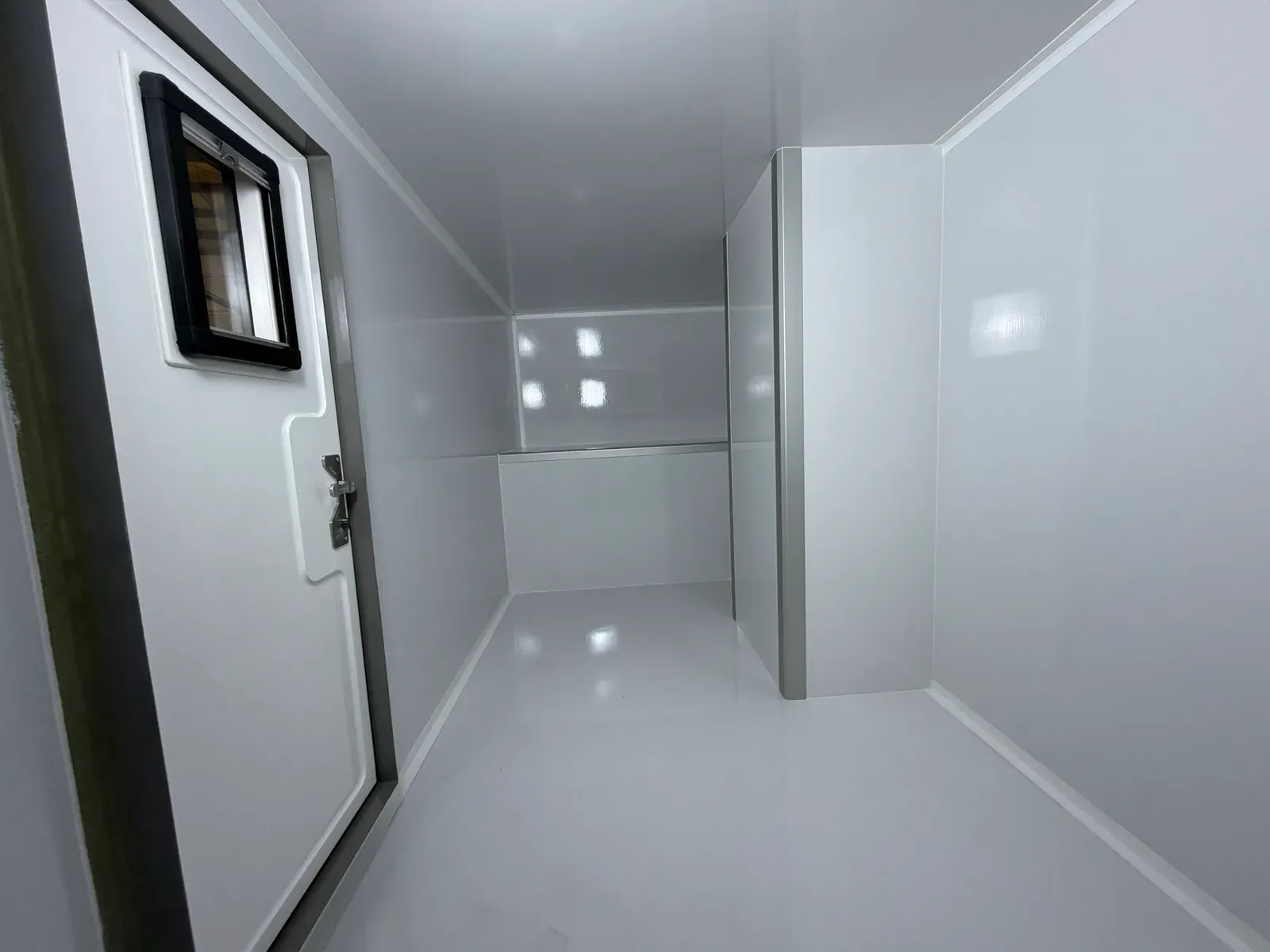
The full length of a finished white composite body — bright, seamless walls, a locking entry door with window, and a glossy wipe-clean floor

Where it fits

Specialty vehicle applications

The same body suits mobile grooming and pet care, veterinary and spay/neuter clinics, medical and dental clinics, fiber and utility field labs, survey and inspection, mobile showrooms, command and communications units, and other mobile work. Foundation builds the body; the layout, equipment and systems are fitted to your mission.

These are applications the platform is built for, not a claim of past builds in every one. Specialty uses are engineered project by project, and not every application is a standard production product — tell us the mission and we will say plainly whether the body fits.

See commercial and specialty use cases

Scope

What Foundation supplies, and what you or your integrator control

Foundation supplies

  • The engineered, insulated composite body
  • Body-to-chassis installation on a torsion-managing subframe
  • Final-stage manufacturing to FMVSS and OEM requirements
  • Entry doors, windows, hatches and skylights as specified

You or your integrator control

  • The interior layout, equipment and fit-out
  • Electrical, HVAC and mission-specific systems
  • Branding, graphics and livery
  • The customer relationship and service

From a one-off to repeatable production

Outfitters and manufacturers can build on Foundation’s standardized composite body as a repeatable starting point and keep their own interior, brand and customer, with private-label options and support from prototype to production. See builder programs for how it works.

Common questions

Composite box body questions

What is a composite box body?

A composite box body is a vehicle body made from structural insulated composite panels rather than a framed metal or wood box. Foundation’s panel has a closed-cell PIR foam core bonded between composite skins, so the wall is insulated, stiff and square.

How is it different from a conventional aluminum delivery box?

Foundation’s wall is a structural insulated panel with continuous insulation and no metal stud frame running through it, joined at the edges with a thermal-break extrusion. Conventional metal-framed boxes have framing members that can carry heat through the wall. Foundation builds engineered bodies for commercial and specialty use rather than a generic dry-freight cube.

Which chassis can the body be installed on?

Ford Transit 350/350HD and Mercedes-Benz Sprinter 3500XD cutaways, the Ford E-Series E-350/E-450, and medium- and heavy-duty trucks including Ford F-450/550, Ram 5500, Chevrolet 4500–6500 and military-grade LMTV/FMTV. If you already run a chassis, we can usually build on it.

Is the body insulated?

Yes. Every body has continuous insulation: R11 in the 1.5-inch panel on van and E-Series bodies and R17 in the 2.5-inch panel on trucks, around a closed-cell PIR core.

Can electrical or HVAC be included?

In Foundation’s standard scope, electrical, HVAC and mission-specific systems are installed by you or your integrator. If your project needs provisions planned into the body, tell us what you need and we will confirm what we can accommodate.

Do you build bodies for every kind of specialty vehicle?

No. The platform suits many kinds of mobile work, but each specialty application is engineered project by project and is not necessarily a standard production product. Describe the mission and the chassis and we will tell you honestly whether it is a good fit.

Start a project

Building a fleet or a one-off?

Tell us the mission and the chassis you run — we'll spec a body that holds up in daily service, and send pricing for your build. Prefer to talk? Call or email us directly.

The message form is loading. You can also email info@foundationvehicles.com or call 720-610-1562 any time.